
IIT BOMBAY DEPARTMENT – CENTRE HIGHLIGHTS
As part of an ongoing series, IIT Bombay is spotlighting its academic departments and Centres of Excellence to showcase the depth and diversity of work taking place across the Institute. From research and innovation to faculty and student achievements, this initiative aims to build greater awareness and engagement within the alumni community. Through these features, we invite alumni to reconnect with their departments and explore meaningful ways to contribute to their continued growth.
This month, we feature IIT Bombay’s Department of Physics and the Ashank Desai Centre for Policy Studies (ADCPS).
***************************
Department of Physics
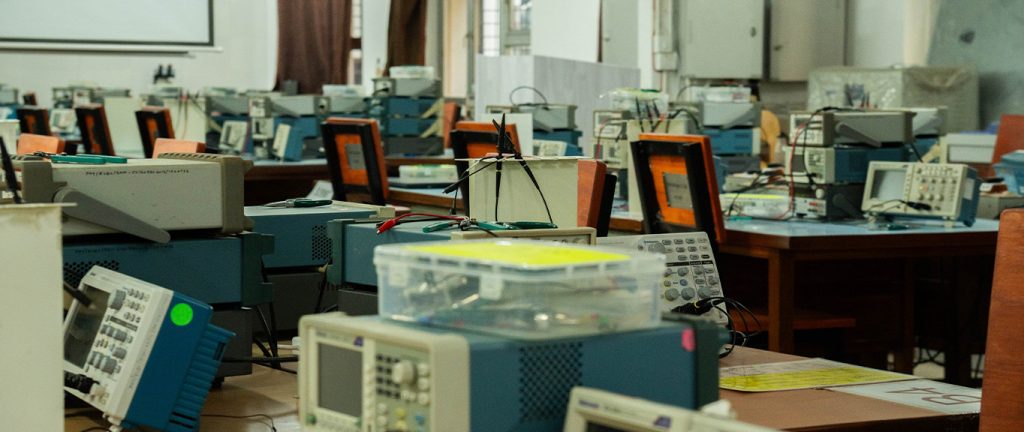
The Department of Physics at IIT Bombay is one of the premier physics departments in India. Since 1959, it has been at the forefront of teaching and research, inspiring generations of students and advancing knowledge across diverse frontiers of physics.
From fundamental science to cutting-edge technology, our faculty and students explore, innovate and collaborate, driving discoveries that shape our understanding of the natural world and create impact for society.
Broad Research Areas
– High Energy Theory
Explores the fundamental laws governing elementary particles and their interactions, with research spanning particle phenomenology, quantum field theory, physics beyond the Standard Model, neutrino physics, cosmology, string theory, and quantum gravity.
– Astronomy, Cosmology and Gravity
Investigates astrophysical phenomena, gravitational waves, cosmology, compact objects, and the fundamental nature of gravity through theoretical modelling, observations, and data analysis.
– High Energy Experiments
Conducts experimental investigations of fundamental particles using collider, neutrino, and astroparticle experiments, with emphasis on detector development, precision measurements, and searches for new physics.
– Condensed Matter Theory
Studies emergent phenomena in quantum materials through analytical and computational approaches, including strongly correlated systems, topology, magnetism, superconductivity, disorder, and first-principles electronic structure methods.
– Condensed Matter Experiments
Investigates the synthesis, characterization, and physical properties of functional materials, nanostructures, magnetic systems, superconductors, semiconductors, and quantum materials using advanced experimental techniques.
– Soft Matter, Biophysics and Nonlinear Dynamics
Focuses on the physics of complex systems, including active matter, biological physics, fluids, polymers, statistical mechanics, nonlinear phenomena, and pattern formation across living and non-living systems.
– Optics and Photonics
Advances research in light–matter interactions through ultrafast optics, spectroscopy, nonlinear optics, nano-optics, plasmonics, photonic materials, and optoelectronic devices.
– Quantum Information Theory
Develops the foundations and applications of quantum information science, including quantum computation, quantum thermodynamics, open quantum systems, quantum communication, and quantum many-body physics.

Recent Awards:
– Prof. S. Shankaranarayanan, his student George Christopher P, and postdoc Hari K won the first prize in the Gravity Research Foundation essay competition 2026.
– Prof. Manibrata Sen has been appointed as the Head of a Max Planck Partner Group at the Max Planck Institute for Nuclear Physics (MPIK), Heidelberg, Germany, in collaboration with IIT Bombay (2026).
– Prof. K.G Suresh won the Prof. S. C. Bhattacharya Award for Excellence in Pure Sciences 2025 from IIT Bombay.
– Multiple faculty members received funding under the National Quantum Mission.
– Prof. Asmita Mukherjee was elected a Fellow of the National Academy of Sciences, India (2025).
– Prof. Prashant Kumar, Prof. Sayantika Bhowal, Prof. Manibrata Sen and Prof. Subhaskar Mondol have been awarded the Prime Minister Early Career Research Grant by ANRF (2025, 2026).
– Prof. Sadhana Dash and Prof Basanta K Nandi, Department of Physics, working for the ALICE Collaboration at CERN, have been awarded the 2025 Breakthrough Prize in Fundamental Physics.
Notable Recent Publications:
– Science Advances (https://www.science.org/doi/10.1126/sciadv.aec6549) by Prof. Gopal Dixit and collaborators
– Nature Communications (https://www.nature.com/articles/s41467-025-67795-1) by Prof. Debojit Sarkar, on behalf of the ALICE Collaboration, CERN
– PLOS Computational Biology (https://journals.plos.org/ploscompbiol/article?id=10.1371/journal.pcbi.1013843) by Prof. Mithun Kumar Mitra and group
– Physical Review Letters (https://doi.org/10.1103/vlzz-gzy5) by Prof. Sumiran Pujari and collaborators
– Physical Review Letters (https://journals.aps.org/prl/abstract/10.1103/2bps-xvl8 ) by Prof. Avinash Mahajan and collaborators
– Physical Review Letters (https://journals.aps.org/prl/abstract/10.1103/wsqw-2xh4 ) by Prof. Soumya Bera and collaborators

FIST facilities:
– Confocal Microscopy
High-resolution confocal microscopy is a powerful tool for studying soft matter systems such as polymers, gels, colloids, and liquid crystals. By capturing sharp, three -dimensional images with excellent optical sectioning, it allows researchers to visualize microstructures and dynamic processes without physically disturbing the sample. In soft matter research, this technique is invaluable for tracking particle motion, mapping phase separation, and observing deformation under stress, enabling a deeper understanding of structure–property relationships at the microscale.
– Clustered Deposition Facility
Cluster deposition is a powerful technique in condensed matter physics for fabricating thin films with precisely controlled nanostructures. In this method, clusters of atoms or molecules often generated via gas condensation from a magnetron sputter source are deposited onto a substrate to form films with tailored physical, chemical, or electronic properties. Because the size, composition, and energy of the clusters can be finely tuned, researchers can engineer materials with enhanced magnetic, optical, or catalytic behavior, enabling advances in nanotechnology, spintronics, and quantum materials research.
Major Research Facilities
– Advanced Materials Characterization: High-resolution and powder X-ray diffractometers (XRD), UV–Vis–NIR spectrophotometers (including reflectance and integrating sphere), physical property measurement systems (PPMS/magnetometers), and high-pressure high-temperature (HPHT) furnace for structural, optical, magnetic, and thermodynamic characterization.
– Nanofabrication and Thin Film Processing: Class 10,000 clean-room facility equipped with mask aligners, thermal evaporators, rapid thermal annealer, spin coaters, ultrasonic wire bonder, and associated thin-film fabrication infrastructure for micro- and nano-device fabrication.
– Microscopy and Surface Characterization: Atomic force microscope (AFM), scanning electron microscope (SEM), optical microscopes, and transmission microscope for high-resolution imaging and surface analysis.
– Cryogenics and Low-Temperature Physics: Liquid helium liquefaction and recovery system, closed-cycle cryostats, and a He-3 cryostat (base temperature ~250 mK) with a 9 T superconducting magnet and sample rotation capabilities for low-temperature condensed matter experiments.
– Ultrafast Laser and Optical Spectroscopy: Femtosecond (10 fs) Ti:Sapphire laser, tunable picosecond laser source, UV–Vis–NIR and NIR spectrometers, high-power NIR LEDs, diode and He–Ne lasers, along with a comprehensive suite of optical components, interferometers, detectors, and spectroscopy instrumentation.
– Electronics and Instrumentation: High-precision and rapid PCB prototyping systems, laser engraving facilities, high-bandwidth digital storage oscilloscopes, and electronic development tools supporting experimental research and instrumentation development.
Centre of Excellence:
Quantum Information Computing Science and Technology (QuICST) Hub, one of the leading centres for quantum research in India
Startup
ART-PV India Pvt Limited: Startup by Prof. Dinesh Kabra focussing on Tandem Solar cell technology under National Centre for Photovoltaic Research & Education (NCPRE).
Recent Workshops, Schools and Conferences organised
– SpaceTech Summer School 2026, organised by IIT Bombay, IN-SPACe, and ISRO’s U R Rao Satellite Centre (URSC), May-Jun, 2026
– Semiconductor Epitaxy and Devices for Quantum Technologies, Jun 2026, IoE-SCPP funded workshop
– International Conference on Photophysics and Photochemistry (ICOPP-2026), Mar 2026, (also supported partly by ANRF and ICTP)
– Recent Trends in Optics and Photonics, Aug 2025, IoE-SCPP funded workshop
– Neutrinos and the Dark Sector, Nov 2025, IoE-SCPP funded workshop
– Quantum Condensed Matter Perspectives at IIT Bombay (QCMP@IITB), December, 2024, IoE-SCPP funded workshop
Additionally, the Department hosts an annual symposium SymPhy, which is organized by the Research Scholars’ Association of Physics (RSAP) – https://www.phy.iitb.ac.in/en/symphy
Reconnect with Physics:
Join the Friends of Physics group to stay updated on the latest developments, breakthroughs, and initiatives in physics at IIT Bombay.
Follow the Physics department page on LinkedIn.
********************************
Ashank Desai Centre for Policy Studies (ADCPS)
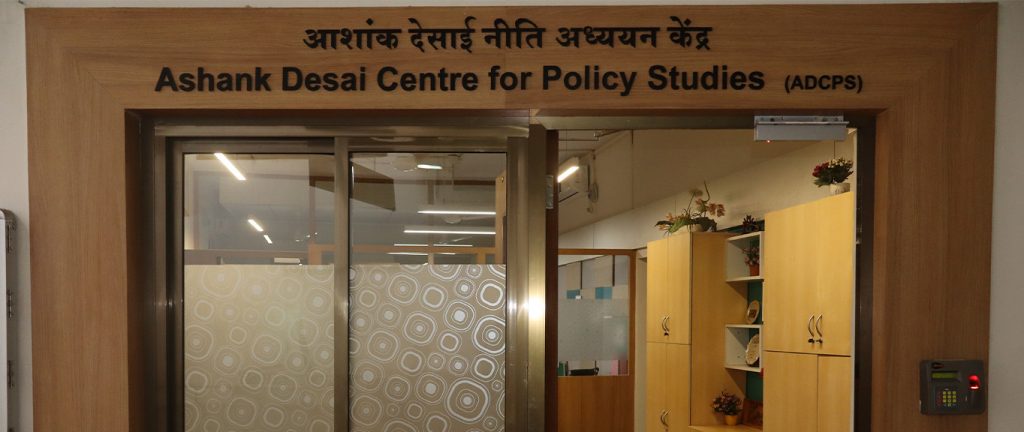
About the Centre
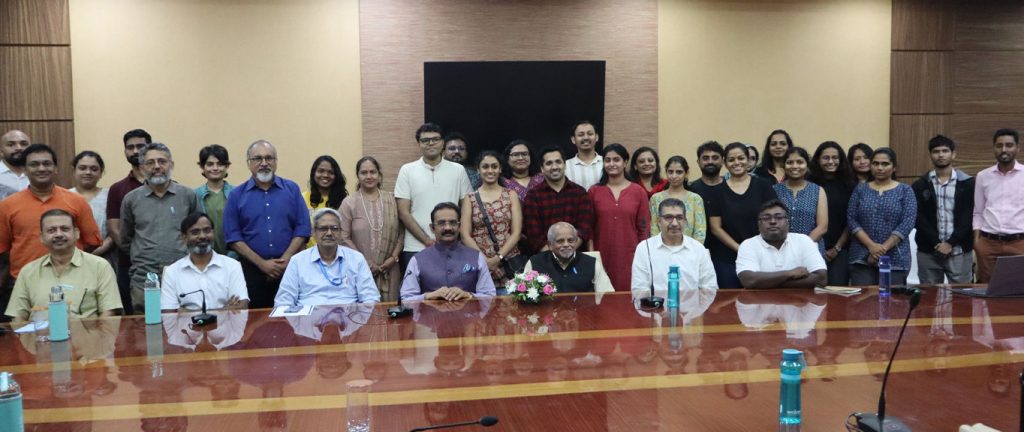
Established in 2016, the Ashank Desai Centre for Policy Studies (ADCPS) at IIT Bombay was founded to build capacity in the then-emerging discipline of public policy studies in India. Today, the Centre serves as a vibrant interdisciplinary hub dedicated to advancing evidence-informed and inclusive public policy through research, education, and engagement with policymakers, practitioners, and academia. The Centre is currently headed by Prof. Vinish Kumar Kathuria.
Over the years, ADCPS has steadily expanded its academic offerings:
| Programme | Introduced |
| PhD in Public Policy | 2017 |
| Master of Public Policy (MPP) | 2019 |
| e-Post Graduate Diploma (ePGD) in Digital Governance* | August 2026 |
*The ePGD is a 24-month online programme offered in collaboration with Educational Outreach, IIT Bombay, with delivery support from Simplilearn.
The Centre brings together a diverse academic community of approximately 33 faculty members, comprising 9 core faculty, 15 associate faculty from departments across IIT Bombay, 1 Distinguished Visiting Faculty, 3 Adjunct Faculty, 4 Visiting Faculty, and 1 Guest Faculty. Its distinguished faculty include, Prof. N.V. Varghese former Director General, NIEPA and Dr. Niteen Kareer, Former Chief Secretar, Govt. of Maharashtra. Since its inception, ADCPS has admitted over 85 PhD scholars, currently hosts 21 MPP students, and has welcomed six postdoctoral fellows in the past.
Research at ADCPS spans six thematic clusters:
– Digital Society and Governance
– Industrial and Economic Policy
– Social Policy (Education, Ageing, and Identity)
– Technology and Policy
– Urban Policy
– Water, Sanitation, Energy, and Climate Change
These clusters address pressing public policy challenges ranging from digital governance, public health, and smart cities to manual scavenging, corporate social responsibility, and climate resilience. Reflecting IIT Bombay’s interdisciplinary ethos, the Centre collaborates extensively with the Department of Humanities and Social Sciences, SJMSOM, IDC School of Design, C-TARA, and other academic units across the Institute.
Beyond teaching and research, ADCPS serves as a platform for informed policy dialogue. Through its The Polilogue Quarterly, Working Paper Series, Policy Brief Series, and Annual Report, alongside a regular calendar of lectures, Policy Talks, round tables, and stakeholder engagements, the Centre continues to foster meaningful conversations that bridge research and policymaking.
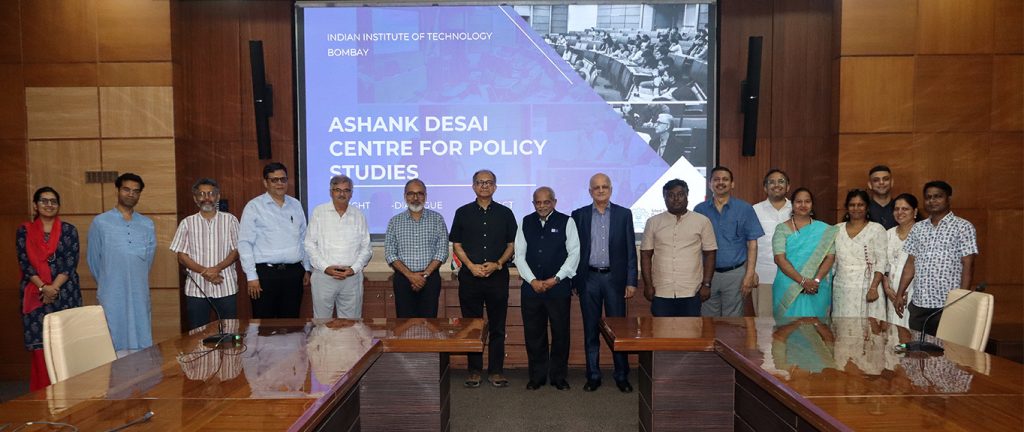
Recent Ongoing Research Work in Digital Governance
Prof. Shishir K. Jha and his students (Soudarya Lakshmi, Amod Moharil, Kriti Srivastava, Sarath K, Rashmi Singh and E.K. Jaisal) are working on different issues pertaining to Digital Governance and Public Value.
Read about their work here.
Recent Publications
– Ajwani, R., Goli, V.S.N.S., Jha, S.K., Singh, D.N., Bhattacharya, S., & Kumari, A. AID framework for improving waste management in post-National Sword Policy era: an Indian perspective. International Journal of Sustainable Engineering 19, no. 1 (2026): 2645299.
– Suresh, R., Vadakkan, A.G.Z., PR, A., & Narayanan, N.C. (2026). A participatory geographic information system-based route optimisation for decentralised municipal solid waste management system: A case study from a flood-prone town in Kerala, India. Waste Management & Research, 0734242X261437538.
– Bonu, S., & Bhushan, I. Is publicly funded health insurance associated with healthcare utilisation and financial protection in India? Evidence from a cross-sectional household survey (CAMS 2022–2023). BMJ Open 16.5 (2026): e106382.
– Sapkal, R.S., Chakma, K., & Parmar, D.C. Bridging the Care Gaps: Exploring the Role of Digital Labour Platforms for Elderly Care in India. Development (2026).
– Rabbani, G., Natarajan, R., & Kathuria, V. Why India’s Firms Are Not Scaling Despite Labour Reforms, Policy Edge, June (2026).
Faculty Highlights
New appointment: Dr Sekhar Bonu joined ADCPS as an Honorary Visiting Professor on 2 June 2026. A 1987-batch IAS officer and Johns Hopkins PhD, he previously served as Director General of NITI Aayog’s Development Monitoring and Evaluation Office (2019–2022) and held a long tenure at the Asian Development Bank, Manila (2004–2019).
Award & recognition: Dr Sundeep Oberoi, Adjunct Professor, has been appointed Chairman of the 11-member MeitY expert committee examining the impact of Quantum Computing on India’s cryptographic standards under the IT Act, 2000.
Student Highlights
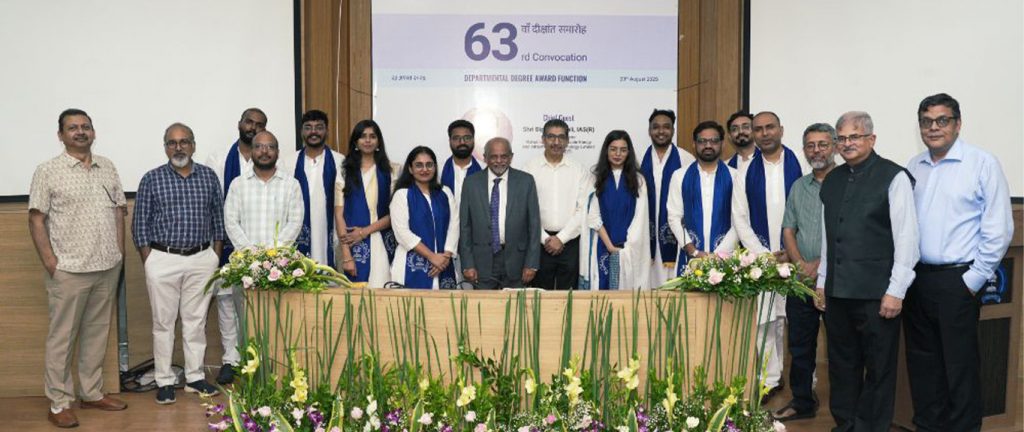
Five PhDs successfully defended this quarter:
– Satish Kumar — Agriculture-Nutrition Pathways in Semi-arid India: A Study of Ahmednagar District, Maharashtra (16 Apr 2026, Supervisor: Prof. K Narayanan)
– Brishti Banerjee — Governing Housing Informality: Policy Categories, Governance Practices and Lived Experiences in Guwahati, India (09 May 2026, Supervisors: Prof. Himanshu Burte & Dr Malini Krishnankutty)
– Trupti Patil — Hypertension-Related Disability in India: Sex- and Gender-Based Evidence and Policy Responses (15 May 2026, Supervisors: Prof. Arnab Jana & Prof. Sarthak Gaurav)
– Kaniska Singh — The Politics of Managing Disaster Vulnerabilities: A Study of Flood Policy Processes in the Kosi River Basin, India (19 May 2026, Supervisor: Prof. N. C. Narayanan)
– Prerna Yadav — From Food Security to Water Crisis: Policy Sequencing and Groundwater Overexploitation in India (21 May 2026, Supervisor: Prof. N. C. Narayanan)
Two new Policy Briefs published:
– Jha, S. K. & Sircar, T. (June 2026). Data Brokering Practices: Conduct and Credibility.
– Jha, S. K. & Nair, A. (June 2026). The Hidden Circuits of Data Governance.
Department Events
08 April 2026 — Breaking Down the National Urban Transport Policy: Why Vision Has Not Translated into Outcomes
Ms Zohra Mutabanna, Associate Director, StudioPOD, examined the gap between the National Urban Transport Policy’s (2006) vision and its implementation.
17 April 2026 — Policy-making in India and Building Meaningful Careers in It
Mr Yash Agarwal (Global Stakeholder Engagement Manager, ICANN; Founder, Public Policy India) explored the real architecture of Indian policymaking and offered students insight into policy careers.
22 April 2026 — Round Table on Maharashtra State Urban Policy, Pune International Centre
A brainstorming session to shape a state urbanisation policy, convened by Dr Nitin Kareer, Dr Himanshu Burte, Dr Malini Krishnankutty (ADCPS), Prof. Pradip Kalbar (ESED, IIT Bombay), Prof. Amita Bhide (TISS), and economist Prof. Abhay Pethe.
22 April 2026 — The Image-Trap of Neoliberal Urban Governance: Caste, Policy, and Waste Work in Hyderabad
Dr Kanthi Swaroop, Research Fellow, ADCPS, examined how urban governance in Hyderabad became a site of political performance.
30 June 2026 — Roles of financial literacy and entrepreneurial orientation in economic empowerment of rural women entrepreneurs
Dr Ashish Desai, Associate Professor, SPJIMR, Mumbai, presented findings that financial literacy and entrepreneurial orientation — not entrepreneurship alone — drive women’s economic empowerment.
Upcoming events
– Launch of the ePGD in Digital Governance (August 2026)
– ADCPS co-hosts the 11th India School on Internet Governance (inSIG) with the Youth India Internet Governance Forum, 4–7 September 2026, at IIT Bombay.