
GROWTH-India Telescope
Propelling India to the Forefront of Global Space Exploration with IIT B’s first fully robotic research observatory and the student engine behind it
At a time when India is accelerating its space technology roadmap – from landmark missions like Chandrayaan-3 and Aditya-L1 to the upcoming Gaganyaan human spaceflight program; there is a parallel need to strengthen the scientific infrastructure that enables discovery, data, and global collaboration.
The GROWTH-India Telescope (GIT) is a strategic national asset:
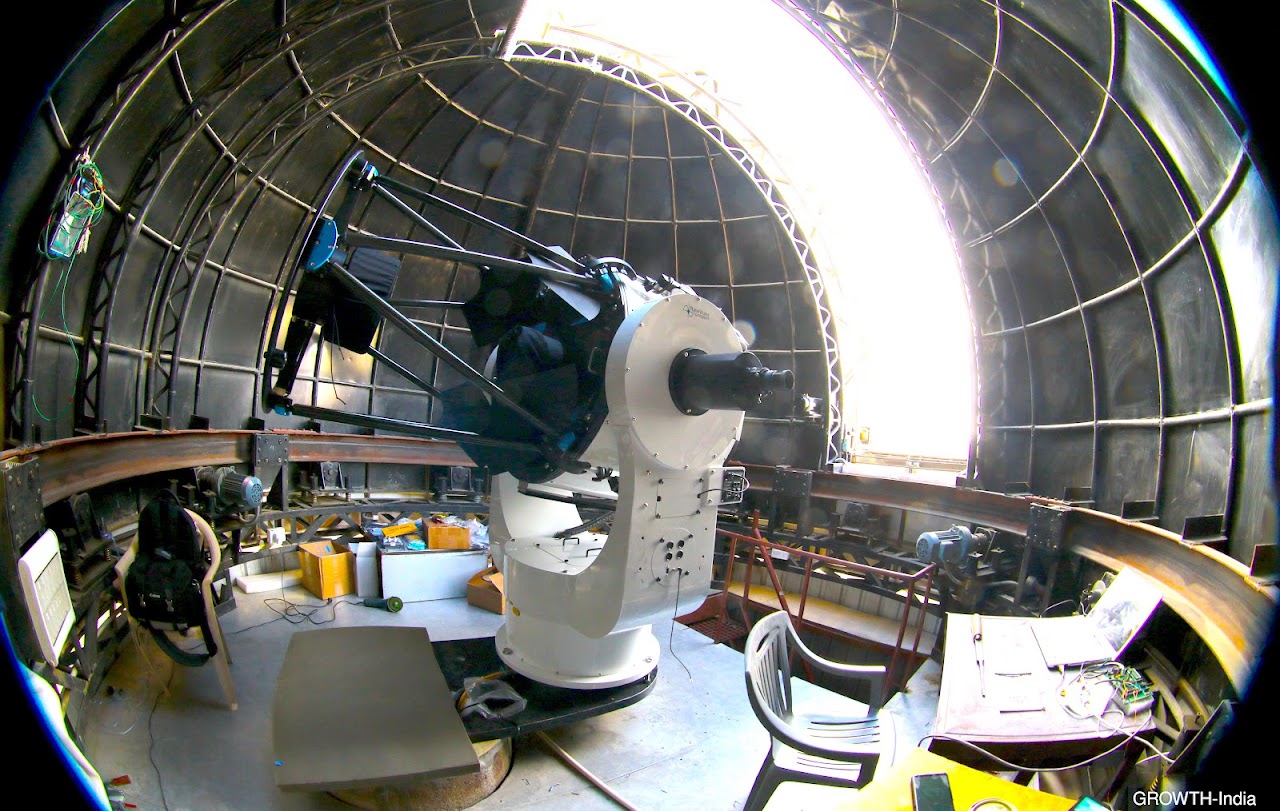
India’s first and only fully robotic optical research observatory, jointly operated by IIT Bombay and the Indian Institute of Astrophysics; it is located at a world-class site in Hanle and operates entirely without human intervention.
Each afternoon, students at IIT Bombay submit a list of celestial targets. The telescope then takes over, autonomously scheduling observations and capturing data from its site. When global networks alert the system to a cosmic explosion, the telescope pivots automatically to record these transient events. By the next morning, the processed data is available on student dashboards.
The outcomes:
This integration of student input and robotic automation has resulted in significant scientific output in seven years. These are primarily student-led achievements; IITB students co-author almost every discovery announcement, including the identification of 2020 QG, the closest asteroid ever recorded to fly past Earth.
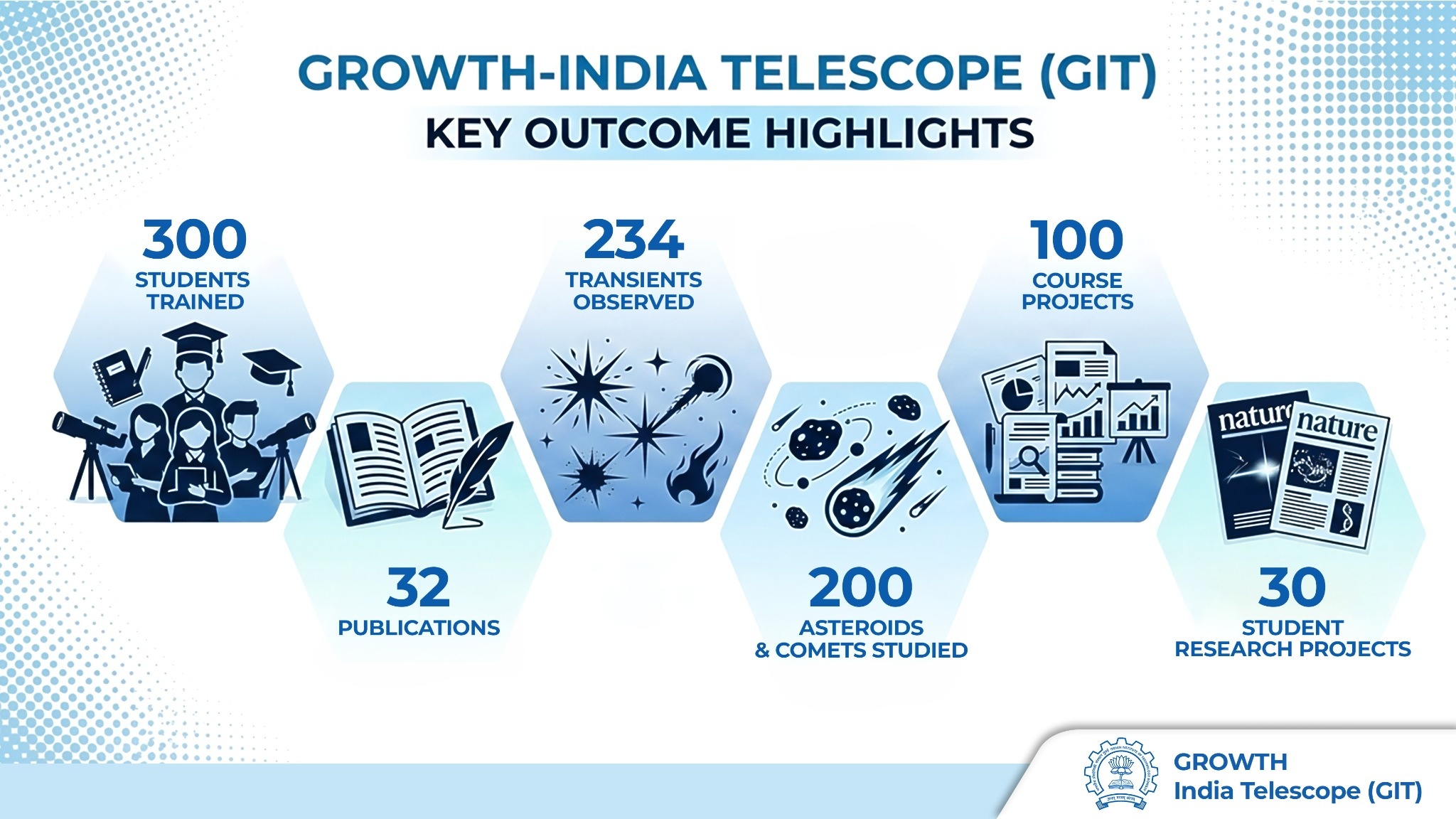
Beyond research, the telescope is a powerful engine for talent development:
IIT Bombay students actively design, automate, and operate the system gaining rare, hands-on experience in space technology, instrumentation, and data-driven science at an early stage.
The GROWTH India Team was conferred the prestigious 2025 Astronomical Society of India Zubin Kembhavi Award for outstanding observational and instrumentation work.
Support the GROWTH-India Telescope
A Global Collaborator
Today, this small but mighty robotic eye in Ladakh stands shoulder-to-shoulder with the giants of the field. Whether follow-up on gravitational wave events or tracking supernovae, GIT regularly coordinates its mission with the James Webb Space Telescope (JWST), Chandra, and India’s own AstroSat.
At GIT, we aren’t just watching the sky; we’ve built a machine that allows our students to lead the conversation on the final frontier.
Opportunities like these exist because alumni funding allows students to travel, collaborate, and take scientific risks early in their careers.
The GIT is funded by IUSSTF and DST-SERB, with operational support from the IITB alumni batch of 1994.
The funding that has kept GIT running since 2020 ends in August 2026. Government grants cover instruments and defined research programmes, but not the ongoing costs that keep a robotic telescope running night after night. We are asking the alumni community to take it forward for the next five years.
Here is what your support will fund:
| Level | Nature of Support | Amount | Impact |
| Level 1 | Operational support for routine operations and contingency | ₹65,00,000 | Mission-critical |
| Level 2 | Publication support for international open-access journals | ₹25,00,000 | Amplifies visibility |
| Level 3 | Hardware upgrades for next-gen capabilities | ₹80,00,000 | Transforms capability |
| Total | ₹1,70,00,000 |
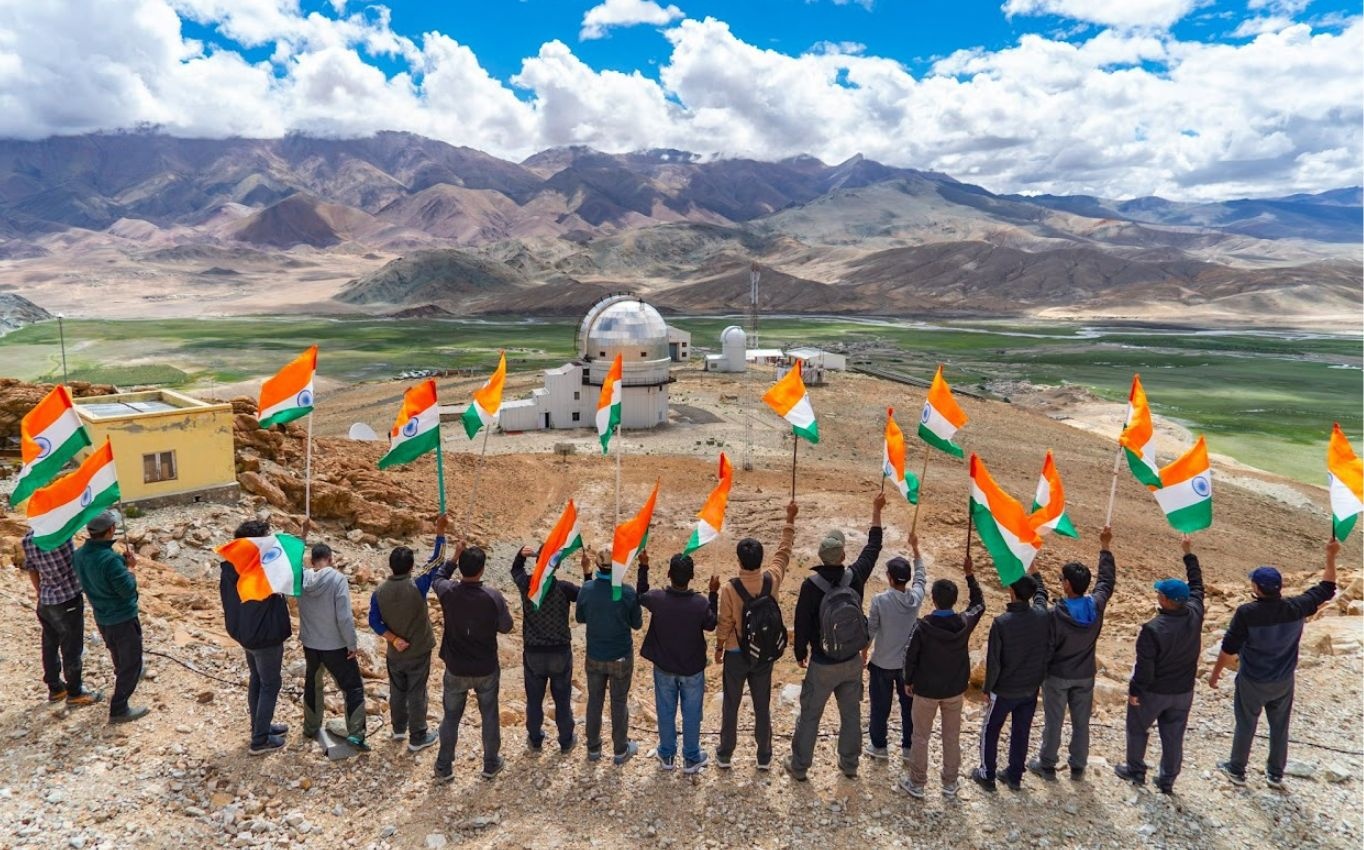
We invite you to join us to support the GIT. It is the only facility of its kind in India, and it is run entirely by our students. Your contribution will ensure that the next cohort of IITB students continues to have access to the same research opportunities that this telescope has made possible since 2018.
Ensure Continuity of India’s Robotic Observatory
Engage with us
We welcome your ideas and suggestions and encourage you to get in touch with us at
