Alumni Conversation – Mr. Raj Gupta

Sixty Years On: Mr. Raj Gupta Looks Back on His IIT Bombay Journey
In February 2027, IIT Bombay’s Class of 1967 will mark sixty years since graduation, and joining the celebration online from the United States will be Mr. Raj Gupta, the former chairman and CEO of Rohm and Haas Company and one of the Institute’s most illustrious alumni. Over a nearly six-decade career, Mr. Gupta has served as a director of 15 public companies, including as Lead Director or non-executive chairman of four Fortune 500 companies, and by his own account remains deeply shaped by the community of IIT Bombay alumni who helped him find his footing when he first left India for the United States in 1968.
Mr. Gupta is the author of Eight Dollars and a Dream: My American Journey, published in 2016. More than 50,000 copies of the book have been sold, and it is available on Amazon.
Earlier this year, Mr. Gupta shared a detailed and personal account of that journey, from his IIT Bombay years to his decades at Rohm and Haas and beyond, in a piece published on Indiaspora. It traces the people, mentors, and institutions that shaped him, alongside his reflections on leadership and legacy, and is by far the fullest account of his life’s journey available publicly.
Alumni who would like to read it in full can find it here: Lessons from a Life’s Journey.
Given how comprehensively that piece already covers his story, we didn’t want to ask him to retread the same ground for this feature. Instead, we asked Mr. Gupta to reflect specifically on what this 60-year milestone means to him, and on what returning, even virtually, to his alma mater for the reunion represents.
And this is what he said.
– In February 2027, you will mark 60 years since your graduation from IIT Bombay. What does this milestone mean to you?
I feel extremely fortunate and blessed that my professional and personal journey post-IIT Bombay has so far exceeded my aspirations and expectations. To start with, it was the reputation of IIT Bombay alumni, together with Prof. K. P. K. Nair’s own reputation and connections, that led to my Fellowship at Cornell University in Spring 1968. For the first semester, I shared an apartment with another IIT Bombay alum, Vijay Singh Bawa (ME 1965), who was working on his PhD in Operations Research and was very helpful as I adjusted to the new environment.
Another IIT Bombay alum, Ashok Bakhru (ME 1964, Hostel 5), deserves credit too. My first job was at Scott Paper Company, starting in June 1969; he started in August 1969 and was my boss for a couple of years. He has remained a close friend and mentor, though I left Scott in November 1971. Who would have thought that nearly 56 years ago, two IIT Bombay alumni would end up at the same company, in the same department!
– As you look back at your IIT Bombay years after six decades, what are some memories or experiences that have stayed with you?
There are so many memories, starting with the fact that it was the first time I was nearly 1,000 miles away from my family and knew not a single person on the campus: learning to compete with the best of the best, building a circle of friends, adjusting to Bombay’s climate, living independently, and eating hostel food.
We had excellent professors, but the “History of Technology” course taught by Prof. N. R. Kamath stands out for me.
I have been deeply touched by a recent event at IIT Bombay. One of my hostel mates died by suicide, and that has remained in my memory, and I often think about what I could have done. Another memory was when I was asked to be the commencement speaker at the 2003 graduation ceremony at the Institute. It remains one of the greatest honours of my life.
The IIT Bombay experience made me confident and independent, and taught me to compete and collaborate with very smart, hardworking classmates.
– Are there particular teachers, classmates, hostel memories, or other experiences from your IIT Bombay years that you find yourself thinking about as the 60th-year reunion approaches?
Four of my high school classmates from BNSD College, Kanpur, joined IIT Bombay, and I made many more friends and started to feel very much at home.
I was expected to start at Cornell in Fall 1967, but was informed that they had overcommitted on their fellowship funding. So my options were to start in the Fall without a Fellowship, or start in Spring 1968 with one. I decided on the second option, as I did not want to add to the financial burden on my parents. This led to another adventure: I got a call from Prof. K. P. K. Nair, offering me an Associate Lecturer position for one semester, at Rs 500 a month, with stay at the staff hostel at IITB. This six-month assignment was a wonderful experience, as I got to know a number of my professors as colleagues.
– You will be joining the reunion online in February 2027. How are you looking forward to marking this milestone with your classmates, even if you cannot be there on campus in person?
I am very much looking forward to the 60th anniversary of our graduation. While I have stayed in touch with a few of them like Naren Gupta, Sushil Gupta, SP Sethi, Kanwal Rekhi, Kalyan Singhal, and a few others, it was the establishment of an online group in recent years that has really broadened my network. I am also fortunate to be a speaker at IIT Bombay alumni events, as well as PanIIT events. We also have an event planned in Spring 2027 in Florida to celebrate the life of Sushil Gupta.
– Having seen IIT Bombay and the world around it change over six decades, what strikes you most when you think about the Institute you knew as a student and the IIT Bombay of today?
I have been fortunate to actively participate in the global business environment for almost 60 years, across numerous sectors, as an operating executive, CEO, Board Chair, or Board Member, in public, private equity, and family-owned companies. What we are facing today is a BANI (Brittle, Anxious, Non-Linear, and Incomprehensible) environment, where there are multiple drivers of change, and they are evolving rapidly. This presents both opportunities and challenges for every institution. Beyond climate change, income disparity, changing demographics, geopolitics, and wars, AI is having, and will have, a dramatic impact across every country, business, and institution — and with it will come significant cybersecurity challenges.
This applies to India as a country, and to IIT Bombay as an academic institution. India is already the 5th-largest global economy, growing at a very healthy pace, and is expected to be in 3rd place within the next 5 to 10 years. How India becomes a global force will require collaboration between business, government, and academic institutions to ensure we are focused on the right priorities.
– Is there anything else about your 60-year journey since IIT Bombay that you would particularly like to share with the alumni community and the extended IIT Bombay community?
Reflecting on my personal and professional journey, my takeaways are:
– Strong core values — honesty, humility, respecting everyone, and giving your best effort — are essential for long-term success.
– Leadership in a BANI world requires ‘Bold’ thinking, ‘Risk’-taking, ‘Best’ talent, ‘Honest’ communication, ‘Learning’ from mistakes, and the ‘Trust’ of your key stakeholders.
– Family support plays a key role.
– Mentors play a critical role, especially ones who see your potential and are willing to give you honest feedback.
Is there anything else you would like to add that we may have missed?
One’s lasting legacy and greatest satisfaction come from the success of your mentees, friends, and family; from giving back to causes you believe in; and from serving people and institutions that do impactful work.
**********
Mr. Gupta’s own account is, in many ways, a small illustration of a much larger story: the extraordinary reach of the IIT Bombay alumni network around the world. It was fellow alumni who opened doors for him at Cornell in 1968, and fellow alumni who gave him his first friendships and mentors in a new country. Sixty years on, that same web of connections, now reinforced by online alumni groups and events like PanIIT, continues to link classmates across continents and generations.
As Mr. Gupta and his batchmates gather to mark six decades since graduation, their journeys are a reminder of how far IIT Bombay’s alumni have carried the Institute’s name into boardrooms, universities, and communities around the world, and of how much of that legacy rests on alumni continuing to find, support, and champion one another long after they leave campus.
**********
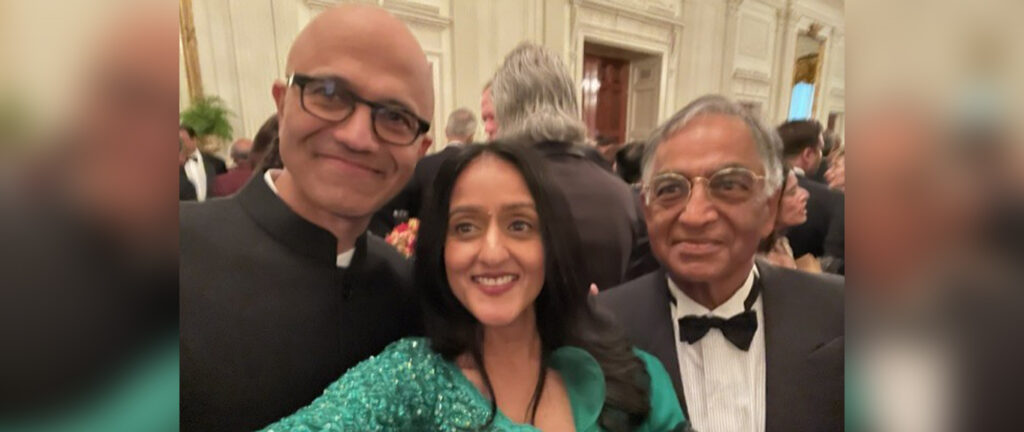
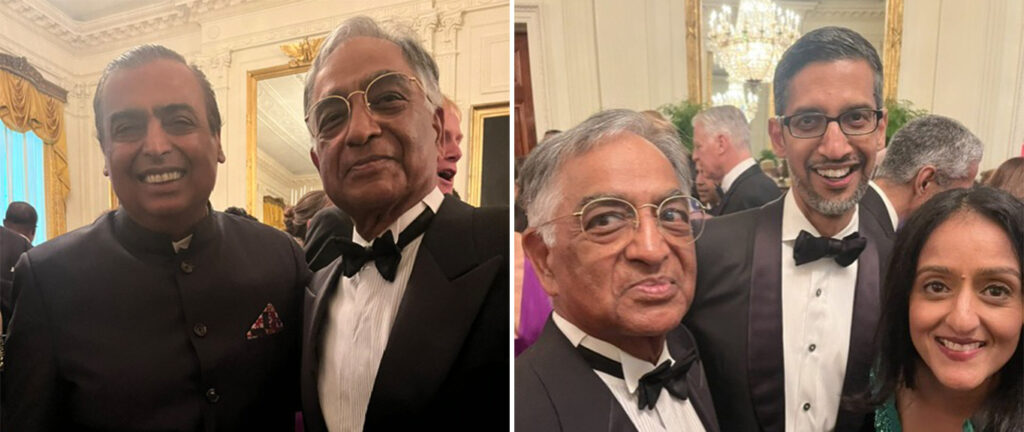
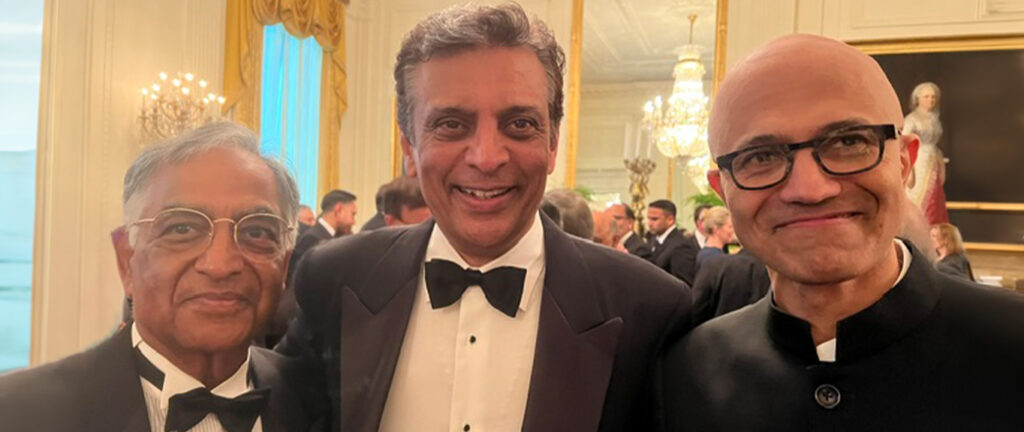
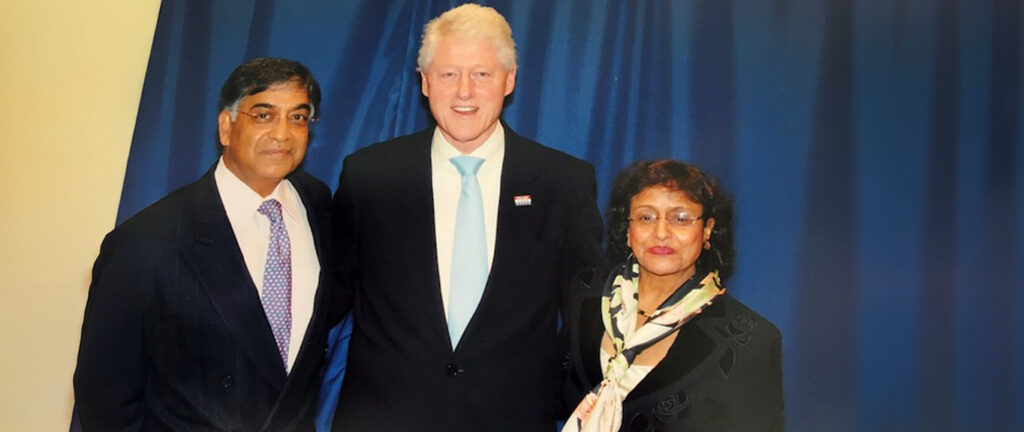
And as we look ahead to his 60th reunion at IIT Bombay, here are a few glimpses of the remarkable company Mr. Gupta keeps, and the extraordinary circles in which our alumni continue to make their mark.