
IIT BOMBAY DEPARTMENT – CENTRE HIGHLIGHTS
As part of an ongoing series, IIT Bombay is spotlighting its academic departments and Centres of Excellence to showcase the depth and diversity of work taking place across the Institute. From research and innovation to faculty and student achievements, this initiative aims to build greater awareness and engagement within the alumni community. Through these features, we invite alumni to reconnect with their departments and explore meaningful ways to contribute to their continued growth.
This month, we feature IIT Bombay’s Department of Mechanical Engineering.
Department of Mechanical Engineering, IIT Bombay
About the Department
The Department of Mechanical Engineering is one of the Institute’s largest academic departments. Today, it comprises 64 full-time faculty members, more than 1,500 students, and over 50 administrative and technical staff. The Department offers various degree programmes, supported by more than 40 teaching and research laboratories equipped with advanced scientific instruments and systems.
Mechanical Engineering at IIT Bombay developed synergy with various branches of science and engineering. The synergy led to a broad spectrum of contemporary engineering challenges through eight Mechanical Engineering Interdisciplinary Research (ME-IDR) groups: AI/ML and Computational Engineering; Biomechanical Engineering; Heat Transfer, Combustion and Energy Systems; Manufacturing Processes, Systems & Automation; Materials Modeling and Characterization; Micro/Nano Science and Engineering; Robotics, Dynamics and Control; and Solid and Fluid Mechanics.
The Department is also expanding its interdisciplinary academic and research footprint through minors, dual-degree programmes, and the adoption of emerging tools including artificial intelligence, machine learning, data science, bio-technology and sensor technologies.
Key Milestones & Research Highlights
The Department continues to advance research across manufacturing, robotics, computational engineering, energy systems, materials, micro/nano engineering, and fluid and solid mechanics.
- Advanced Additive Manufacturing: Research led by Prof. Gurminder Singh focuses on advanced manufacturing of metals, ceramics, and polymers through additive, subtractive, and hybrid approaches. The research spans high-precision ceramic additive manufacturing, metal additive manufacturing, multi-material and biodegradable polymer printing, topology-optimised lattice structures, sustainable manufacturing, and advanced tribology and surface engineering. A key focus is materials design and process engineering for customised performance, enabling the development of materials and components tailored for specific mechanical, thermal, wear, biological, and functional requirements. The group integrates experimental approaches with finite-element modelling, computational methods, and machine learning for process–structure–property–performance prediction, including sintering behaviour, deformation, surface characteristics, and functional component design.
- Translational Manufacturing & Industrial Applications: Research and consultancy activities include evaluation and redesign of BFNV wagons for JSW, with recommendations subsequently adopted by Texmaco; evaluation of radial gates of the Koyna Dam and IoT-based structural health monitoring; and development of indigenous OCTG connectors for the oil industry.
- Medical Robotics & Micro-Manufacturing: Prasanna Gandhi’s group continues work in medical robotics and micro-manufacturing, including the Spanda1 3D microprinter, a precision surgical robotic platform, and technologies for plasma separation from a single blood droplet. A US patent was granted in 2025 for high-aspect-ratio structure fabrication.
- Computational Engineering: Research is advancing AI-accelerated computational methods for fluid and solid mechanics, alongside work on generalized heat-transfer models and high-frequency surface acoustic waves in silicon.
- Fluid Mechanics & Energy Harvesting: Research in interfacial fluid dynamics and fluid-structure interaction has resulted in studies of droplet impact and evaporation, moving fluid-solid interfaces, and energy harvesting. An Indian patent has also been granted for a piezoelectric energy harvesting system.
- Robotics & Autonomous Systems: Research in informative path planning and swarm robotics is being expanded through the development of a dedicated robot swarms laboratory, with applications being explored in defence, agriculture, emergency response, and construction.
- Emerging Research Infrastructure: Initiatives in the pipeline include development of a 2D Particle Image Velocimetry (PIV) facility for measurements in microliter droplets, a facility for experimental testing of scaled-down aircraft/UAV models as part of work on radar stealth technologies, and continued development of advanced manufacturing capabilities.
The Department also continues to strengthen international and industry engagement through conferences, workshops and collaborative programmes. Recent activities include a ME-IDR research symposium MechAdvance26, the MED PG Alumni Reunion 2026, workshops on cryogenic manufacturing and liquid helium/liquid hydrogen plants, and international conferences in additive manufacturing, deep drawing research and related areas.
Recent Faculty Awards & Recognition
The Department’s faculty have received several significant recognitions over the past year:
- Sanjay Pande received the Lifetime Achievement Award from AIMTDR in 2026.
- Amit Agrawal received the IIT Kanpur Distinguished Alumni Award 2025.
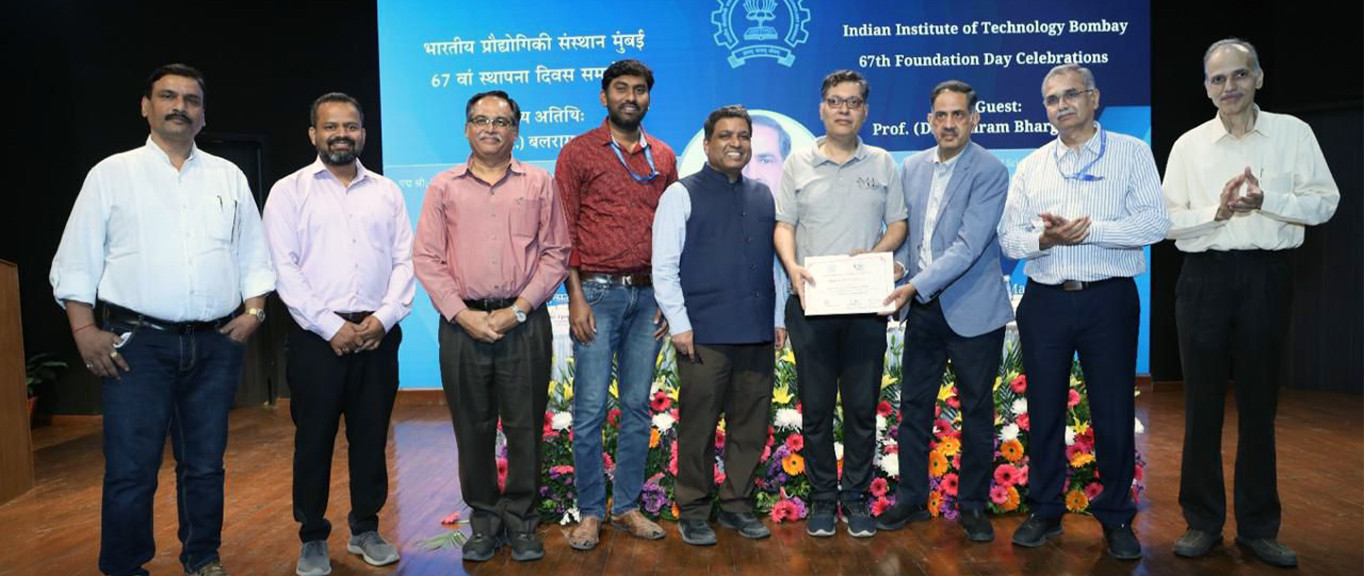
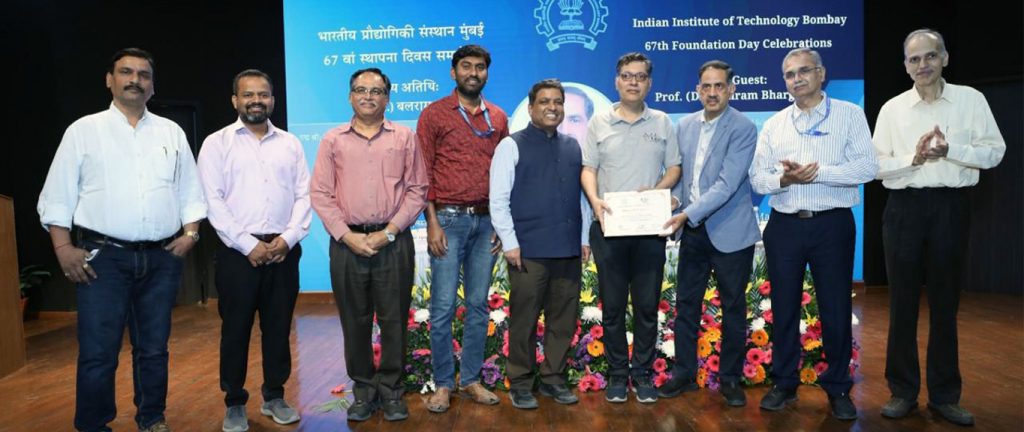
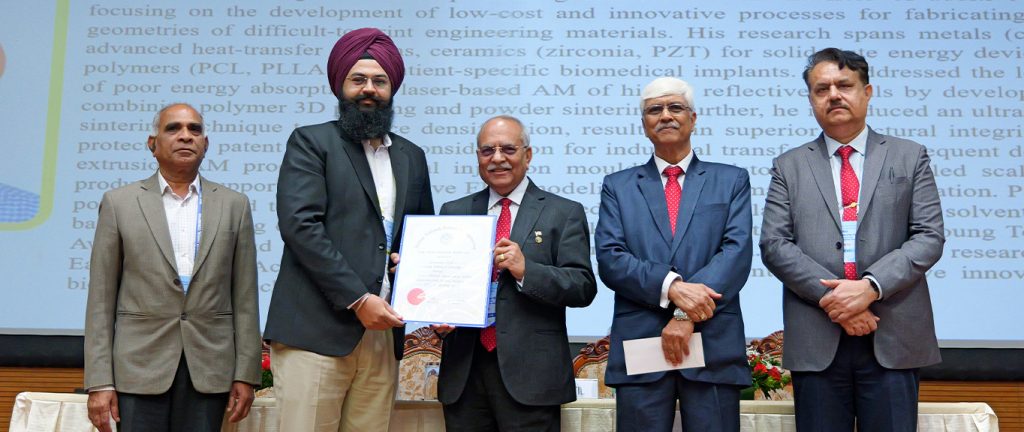
- Gurminder Singh received the INAE Young Engineer Award 2025, was selected as an INAE Young Associate 2025, and received the IIT Bombay Early Research Achiever Award 2025.
- Janani Srree Murallidharan was selected as an INAE Young Associate 2025 and received the INAE Young Engineer Award 2025.
- Atul Sharma was elected a Fellow of the National Academy of Sciences, India, in 2025.
- Ramesh Kumar Singh was elected an ASME Fellow and serves as President of the International Institute of Micromanufacturing.
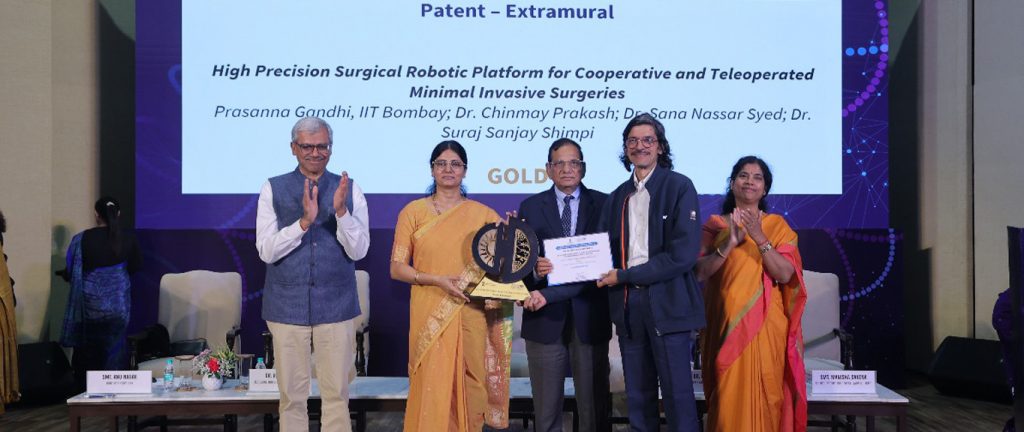
- Prasanna Gandhi received the ICMR Gold Patent Award 2025 for a precision surgical robotic platform and the SRISTI GYTI Award 2025 for a novel microneedle printing machine.
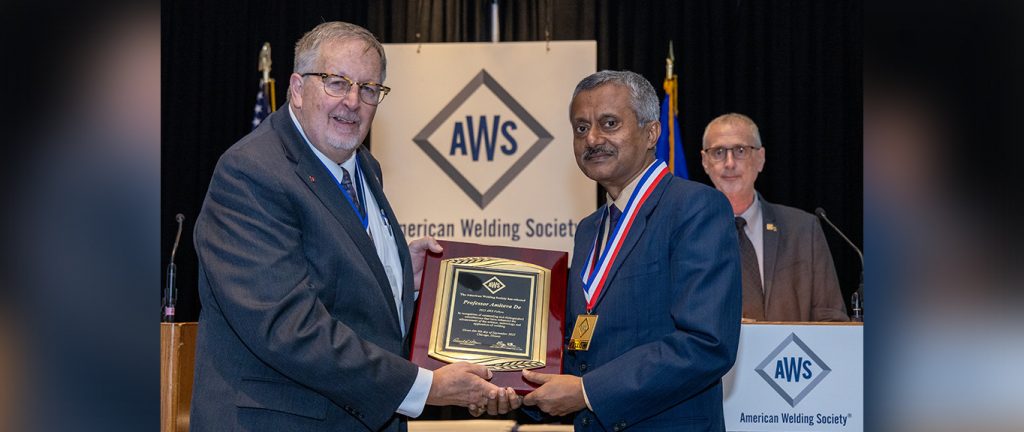
- Amitava De was selected as a Fellow of the American Welding Society in 2025.
Recent Student Awards & Recognition
Students and research scholars from the Department have also received recognition at national and international forums:
- Rajendra Hodgir, Ph.D. student, received the VASVIK IIM MC Promising Materials Engineer Award 2026 from the Indian Institute of Metals, Mumbai Chapter, for his work on enhancing build rate and microstructure in SS316L additive manufacturing.
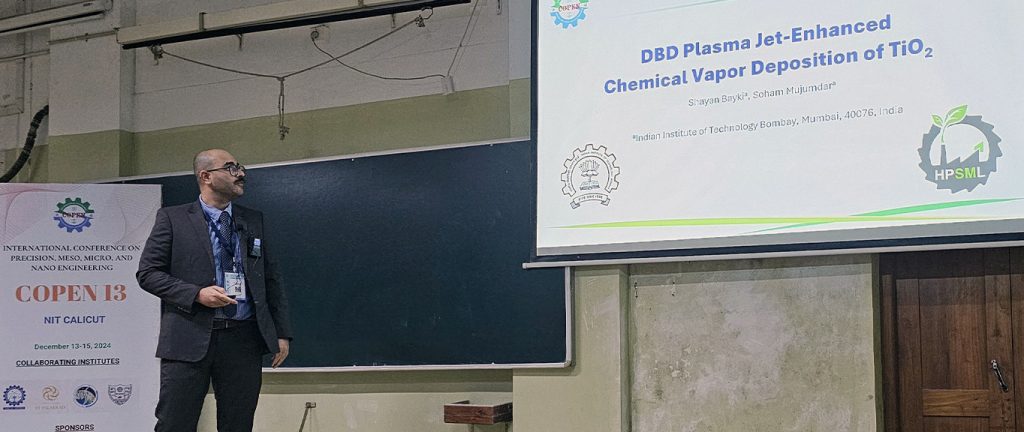
- Shayan Bayki, Ph.D. student, received the Best Student Award at the Mechanical Engineering Department, IIT Bombay, in 2026.
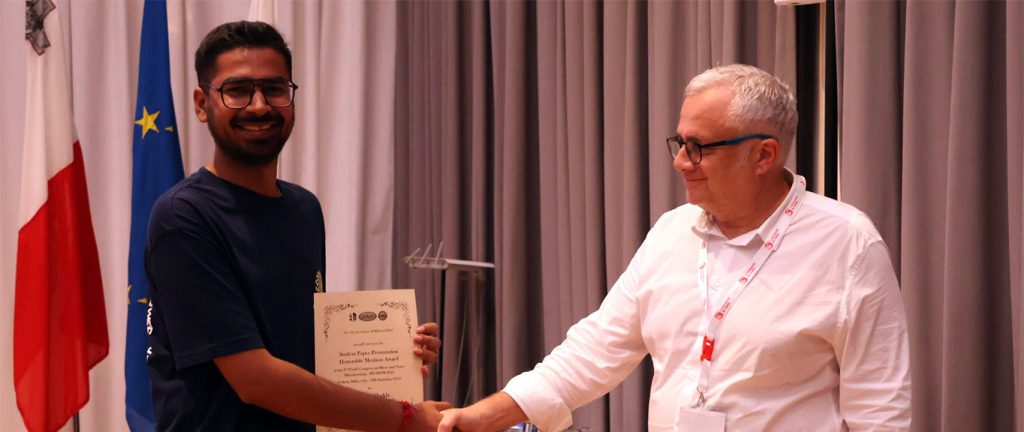
- Shashank Shukla, Ph.D. student, received the Best Student Presenter Award at the World Congress in Micro & Nanomanufacturing (WCMNM) 2025 in Malta.
- Shayan Bayki also received the Best Paper Award at the 13th International Conference on Meso, Micro and Nano Engineering (COPEN-13).
- Sumant Morab, Ph.D. student, received the IIT Bombay Best Ph.D. Thesis Award 2025 for his thesis on computational fluid-structure-acoustic interaction and its application to phonoangiographic diagnosis of diseased arteries.
- Mithilesh Singh, Ph.D. student, received the Best Design of AM Award 2026, “Generative Design of Micro-Drone Frame for Low-Cost Resin Additive Manufacturing” at the International Conference on Additive Manufacturing and Characterization (ICAMC) 2026 at IIT Madras.
- G Sri Bharani, Ph.D. student, received the Best Oral Presentation Award 2026, “Investigation on microstructural evolution and corrosion behavior of material extrusion 3D printed copper parts” at the International Conference on Additive Manufacturing and Characterization (ICAMC) 2026 at IIT Madras.
Upcoming Events & Initiatives
- International Workshop on Active Matter in Mechanics — planned for February 2027, to be organised by the Department.
- Development of RADAR Stealth Technologies — an ongoing initiative with DRDO, including the development of a facility for experimental testing of scaled-down aircraft/UAV models.
- Spanda1 Commercialisation Project — the 3D microprinter commercialisation programme is funded through the IoE Translation Research Center through 2028.
- IITB–Monash Research Academy — ongoing leadership of global joint Ph.D. programmes through 2027.
- IITB–Tohoku University Alliance — the Department is leading the Robotics academic vertical for the cotutelle Ph.D. programme.
Areas Where Alumni and Industry Partners Can Contribute or Collaborate
1- Advanced Manufacturing & Industry 4.0
Support advanced manufacturing infrastructure, sponsored research, industry testbeds, and technology translation in additive/hybrid manufacturing, AI-enabled manufacturing, and sustainable production.
2- Defence & Strategic Technologies
Collaborate on the indigenisation and development of critical mechanical technologies for defence and strategic applications.
3- AI, Robotics & Computational Engineering
Support research and real-world applications in AI-accelerated computational mechanics, autonomous systems, robot swarms, and intelligent engineering systems.
4- Clean Energy & Sustainable Technologies
Partner with faculty on the development and validation of clean-energy technologies based on flowing air and water, alongside research focused on sustainable engineering.
5- Student Development, Innovation & Entrepreneurship
Support students through internships, industry-sponsored projects, capstone projects, fellowships, mentorship, laboratory development, and opportunities to translate research into products and ventures.
6- Provide industry problems, components, materials, datasets, test facilities, and application requirements for joint development and validation. Collaborate to take technologies from laboratory-scale proof-of-concept to prototypes, field validation, intellectual property, and industrial deployment.