
Faculty Alumni Network (FAN) Symposium 2026
FAN 2026: Architecting India’s Future through Synergy and Innovation
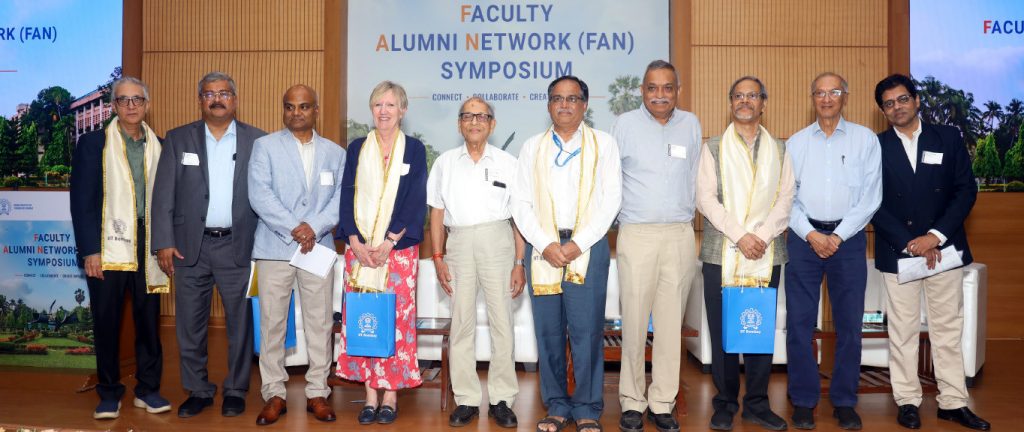
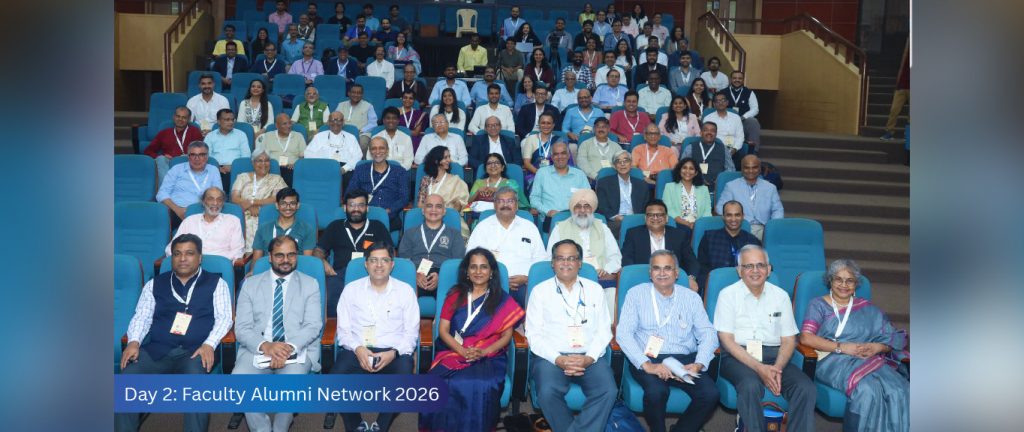
Since its inception in 2003, rooted in a gathering of passionate minds in San Francisco alongside the IIT Bombay Heritage Foundation, the Faculty Alumni Network (FAN) has evolved into one of IIT Bombay’s most anticipated annual forums. This June, the return of the FAN Symposium to the Institute’s Powai campus marked a significant chapter in an initiative defined by its expanding ambition, reach, and impact. Over the course of two days, the event demonstrated a powerful conviction: India’s most pressing challenges are its greatest opportunities.
Reimagining the Foundation: The Pedagogical Shift
At the core of this year’s symposium was a shared commitment to reimagining engineering education in India. Nearly 300 attendees, comprising faculty, distinguished alumni, industry leaders, researchers, and students, converged to explore the fundamental transition from teaching to learning.
Prof. Arunkumar Sridharan and Prof. Virendra Sethi set the stage, identifying this shift as a critical strategic priority for IIT Bombay, complete with a roadmap and the necessary resources to sustain the agenda.
The vision was further underscored by Prof. Shireesh Kedare, Director, IIT Bombay, who, in his welcome address, highlighted that the movement seeded by FAN is already inspiring other IITs, with initiatives like SemiX serving as a prime example of what this community can catalyse together.
Following the keynote by Padma Shri Prof. Mamidala Jagadesh Kumar, Former Chairperson, University Grants Commission (UGC), the discourse delved into the practical mechanics of this educational transformation. Participants engaged in focused sessions and breakout discussions covering pedagogical innovations, Learning Management Systems (LMS), assessment and evaluation, career connectivity, faculty development, student support, and R&D in teaching and learning.
The day concluded with a heartfelt vote of thanks from Prof. Arunkumar Sridharan to every participant who contributed to the day’s meaningful outcomes.
Driving National Ambitions: DeepTech and Global Impact
The momentum continued into the second day, moving the focus toward India’s deep technology aspirations. Following opening remarks from Prof. Shireesh Kedare and a welcome address by Prof. Upendra Bhandarkar, Dean, Alumni and Corporate Relations, Prof. Milind Atrey, Deputy Director (Academics, Research and Translation), provided an address on Frontier Research, reinforcing the Institute’s commitment to cutting-edge innovation.
The symposium hosted two esteemed dignitaries who offered distinct perspectives on translating science into societal progress:
- Dr. Shekhar Mande, President of the Indian National Science Academy (INSA) and Former Director General, CSIR, delivered a keynote on “How to Spot and Support Good Science.” Drawing from his leadership of the national COVID-19 response, spanning surveillance, diagnostics, vaccines, and supply chain management, he championed science that prioritises tangible, real-world impact.
- Ambassador Ms. Sripriya Ranganathan, Secretary (CPV and OIA), Ministry of External Affairs, joined as Guest of Honour. In an inspiring fireside chat with Prof. Anurag Mairal, she advocated for transitioning diaspora engagement from mere connection to active, circular contribution in biotechnology, water, and maritime sectors. She observed that India’s role as a trusted global partner makes this open exchange possible, with the ultimate goal of “Viksit Bharat” serving as a pathway to well-being for all.
This national-scale outlook was further explored through a dedicated session on Air Quality and four critical breakout themes: BharatGen: AI Sovereignty for India, Healthcare Tech/Innovation, Semiconductors, and Critical Minerals. These sessions fostered discussions on solutions for enhancing self-reliance and global competitiveness. The symposium concluded with an afternoon session on the “Challenges for the DeepTech Ecosystem,” where leaders from academia, industry, investment, and startups examined the pathways needed to build a world-class innovation landscape for India.
By bridging the gap between educational foundations and high-stakes technological impact, FAN 2026 demonstrated what is possible when faculty, alumni, industry, and students unite under a shared mission.
Image and story sources: DACR LinkedIn FAN 1 / DACR LinkedIn FAN 2
For more on each of the sessions, click here: Air Quality: Solving Challenges In India And Beyond / Healthcare Tech / Innovation – Critical Minerals – Semiconductors – Challenges For The Deep-Tech Ecosystem – Bharatgen: AI Sovereignty For India