
Bharat Innovates 2026
IIT Bombay Takes Centre Stage at Bharat Innovates 2026
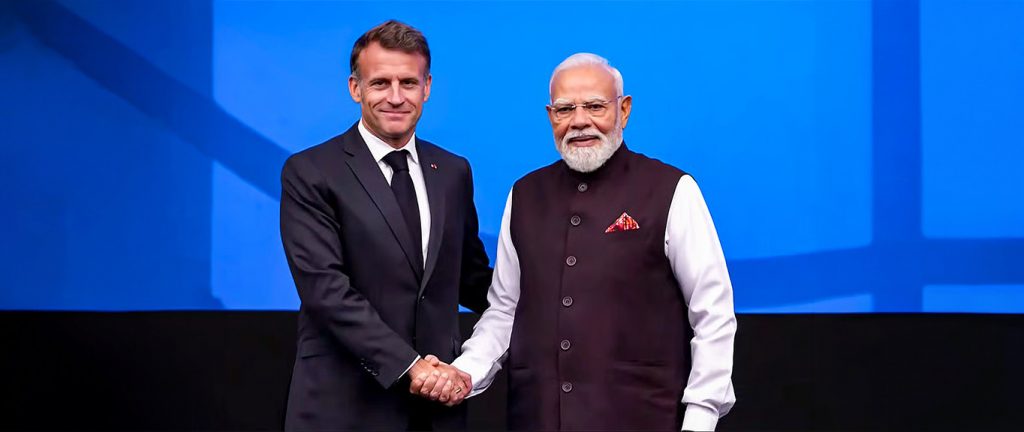
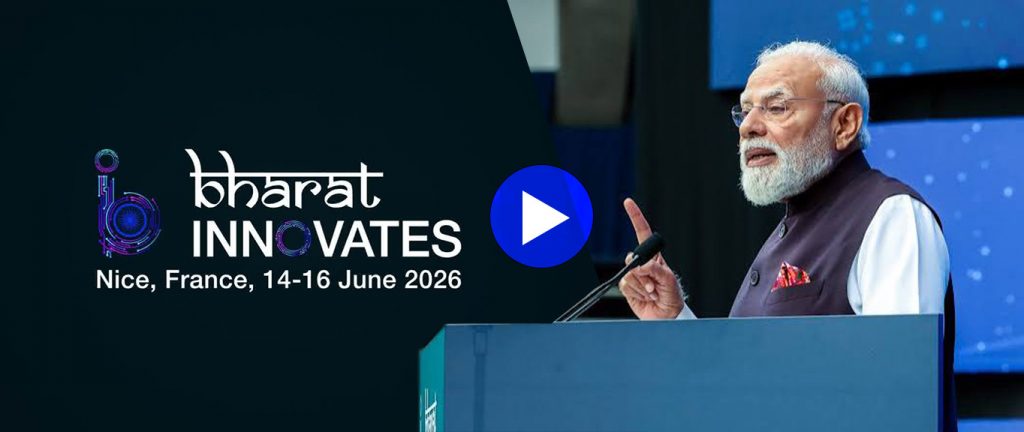
IIT Bombay emerged as one of the defining faces of India’s deep-tech ambitions when the Honourable Prime Minister of India, Shri Narendra Modi, and the Honourable President of France, Mr. Emmanuel Macron, officially inaugurated Bharat Innovates 2026 in Nice, France, as part of the India-France innovation engagement.
IIT Bombay hosted the highly successful Pre-Global Summit at Aspire Research Park with 2600+ participants in March 2026. The event welcomed Prof. Ajay Kumar Sood (Principal Scientific Adviser) and Shri Dharmendra Pradhan (Former Union Minister of Education).
By the time the Global Summit commenced in Nice in June 2026, the Institute had arrived not merely as a participant, but as a showcase of what is possible when world-class research, technology translation, and entrepreneurship converge. Across artificial intelligence, clean energy, advanced materials, education technology, and next-generation power systems, IIT Bombay demonstrated how Indian science is moving from laboratories to real-world impact.
The Global Summit welcomed several dignitaries, including:
- The Honourable Prime Minister of India, Shri Narendra Modi
- The Honourable President of France, Mr. Emmanuel Macron
- Shri Piyush Goyal, Honourable Union Minister of Commerce & Industry
- Ajay Kumar Sood, Principal Scientific Adviser
IITB STARTUPS AT BHARAT INNOVATES
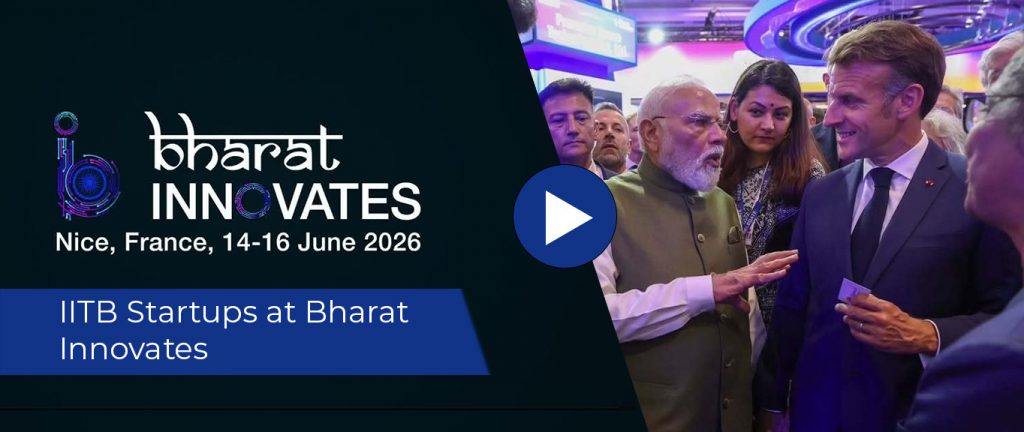
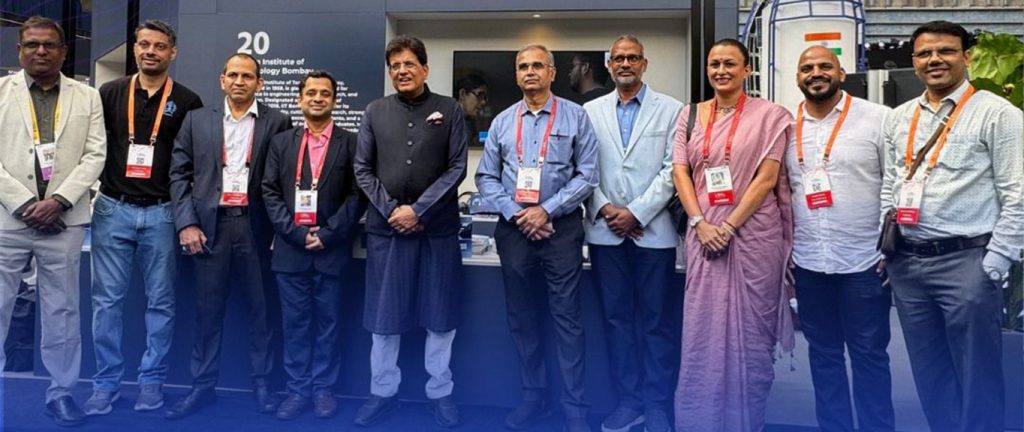
The Honourable PM, Shri Narendra Modi and French President, Emmanuel Macron, at IITB’s Startups
IIT Bombay mentored 80+ startups, which included 50+ hours of mentoring by seven expert mentors for Bharat Innovates 2026. From these, the Institute shortlisted 16 startups that represented seven frontiers. Their participation showcased the Institute’s growing ability to translate research into entrepreneurial ventures that address global challenges. For three days, these 16 teams stood shoulder to shoulder with the best of global innovation, exhibiting at their own stalls, meeting investors, industry partners, and policymakers, and showcasing the excellence, innovation, and global potential of Indian deep-tech built at IIT Bombay.
What stood out was the sheer breadth of the companies that represented seven frontier sectors. These included:
Aerospace & Defence: Bellatrix Aerospace, ideaForge, and Manastu Space, building the propulsion systems, drones, and space technologies of the future.
Biotechnology: AmyScan Healthcare and Immuno Adoptive Cell Therapy, advancing diagnostics and next-generation cell therapy.
Healthcare & MedTech: Ayati Devices, Haystack Analytics, and Lifespark Technologies, taking earlier, smarter care to more people.
Sustainability & Climate: Inphlox Water Systems, Torus Robotics, Trinano Technologies, UrjanovaC, and VDT Pipeline Integrity Solutions, working across water, robotics, advanced materials, clean energy, and critical infrastructure.
Advanced Computing: QuNU Labs, securing the quantum era.
Semiconductors: iMumbai Semiconductor, building India’s own chip capability.
Manufacturing 4.0: Atomberg Technologies, reimagining everyday products through energy-efficient design.
Deep-Tech Innovations for National and Global Challenges
At the heart of IIT Bombay’s presence was a portfolio of technologies addressing some of the most pressing challenges of our time.
BharatGen: Building AI for India’s Languages
Leading the showcase was BharatGen, IIT Bombay’s ambitious multilingual AI initiative developed in collaboration with a consortium of nine premier institutions. Designed to serve all 22 scheduled Indian languages, BharatGen represents a major step towards sovereign, inclusive AI infrastructure.
Its ecosystem includes foundational language models, speech recognition systems, text-to-speech capabilities, and document understanding tools tailored specifically for Indian contexts. With applications spanning governance, healthcare, education, finance, insurance, and cultural preservation, BharatGen demonstrates how AI can be built not just for scale, but for linguistic and societal inclusion.
Reimagining Clean Energy (TANDEM and SST)
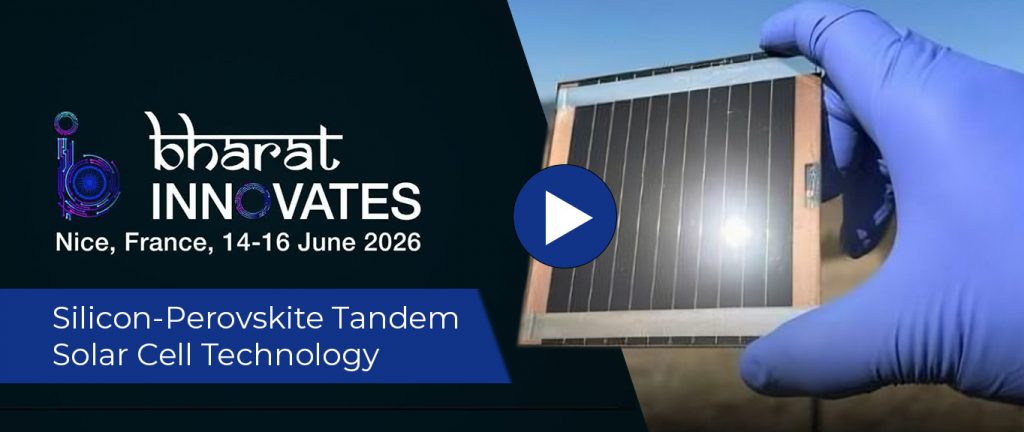
IIT Bombay also presented its Silicon-Perovskite Tandem Solar Cell technology, developed to push the boundaries of solar efficiency while reducing dependence on imported technologies. Having already achieved efficiencies exceeding 30 percent and backed by multiple patents, the technology offers a pathway towards more affordable and sustainable energy solutions for both terrestrial and space applications.
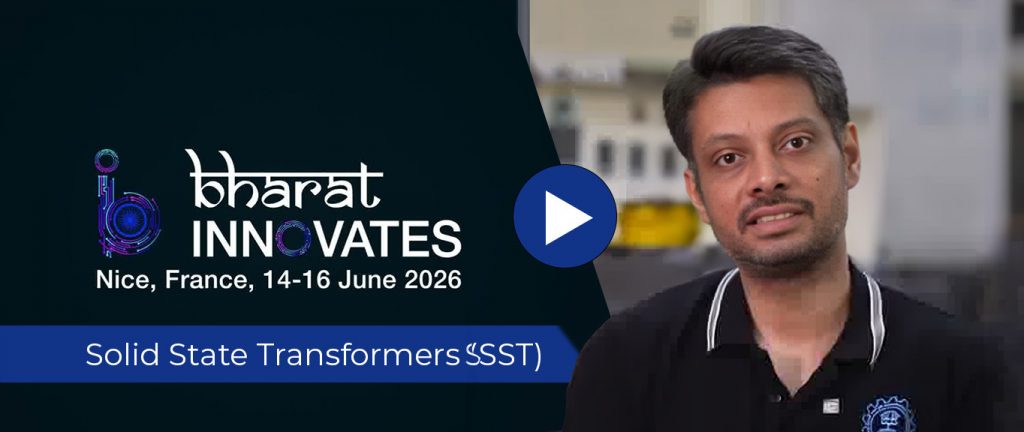
Complementing this effort was the Institute’s Solid State Transformer (SST) technology. Developed in the Department of Electrical Engineering, SSTs represent a new generation of power infrastructure that is smaller, more efficient, and easier to scale than conventional transformers. With potential applications in AI data centres, renewable energy systems, and fast EV charging networks, the technology reflects IIT Bombay’s commitment to building the energy systems required for the future economy.
Smarter Exploration, Better Resource Security (DhatuVerse)
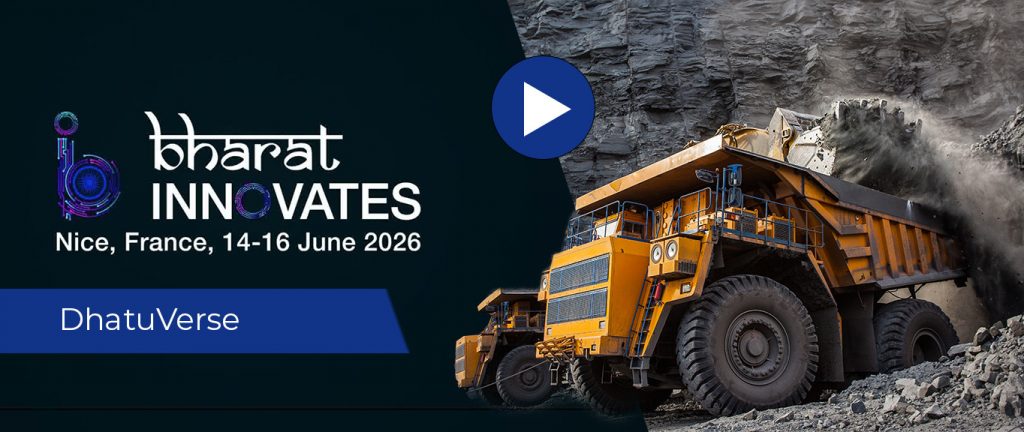
Another standout innovation was DhatuVerse, an AI-powered geostatistical platform transforming mineral exploration. By integrating geological, geophysical, geochemical, and geospatial data into intelligent three-dimensional subsurface models, the platform enables more accurate resource discovery while reducing risk and uncertainty.
At a time when access to critical minerals is becoming increasingly important for energy transition and industrial growth, technologies such as DhatuVerse position India to explore and manage strategic resources more effectively.
Technology for Learning Outcomes (TARA)
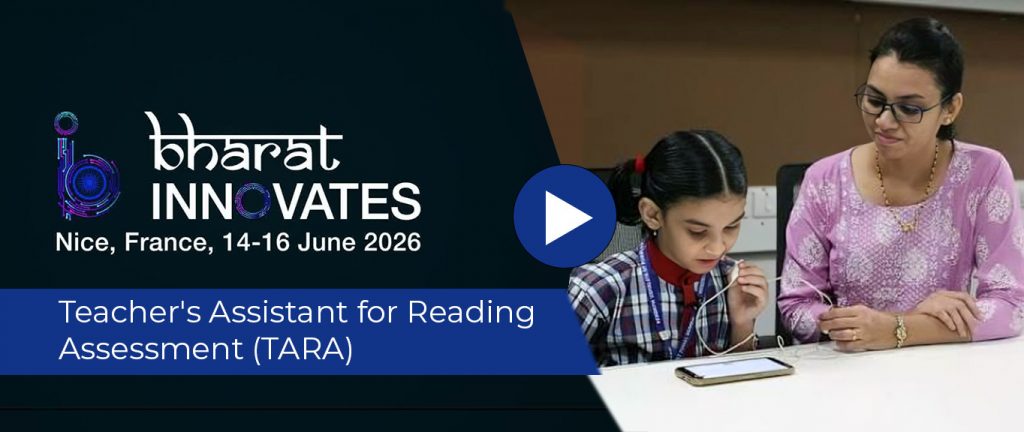
Not all innovation on display was industrial. IIT Bombay’s TARA (Teacher’s Assistant for Reading Assessment) highlighted how advanced AI can address foundational educational challenges.
Already deployed across more than 1,200 Kendriya Vidyalaya schools and serving approximately 700,000 students, TARA assesses reading proficiency by analysing a child’s accuracy, pace, and expression while reading aloud. By giving teachers actionable insights at scale, the platform has emerged as a promising tool for improving literacy outcomes across India’s school system.
MoUs Signed
The institute signed several MoUs during the three-day event in Nice.
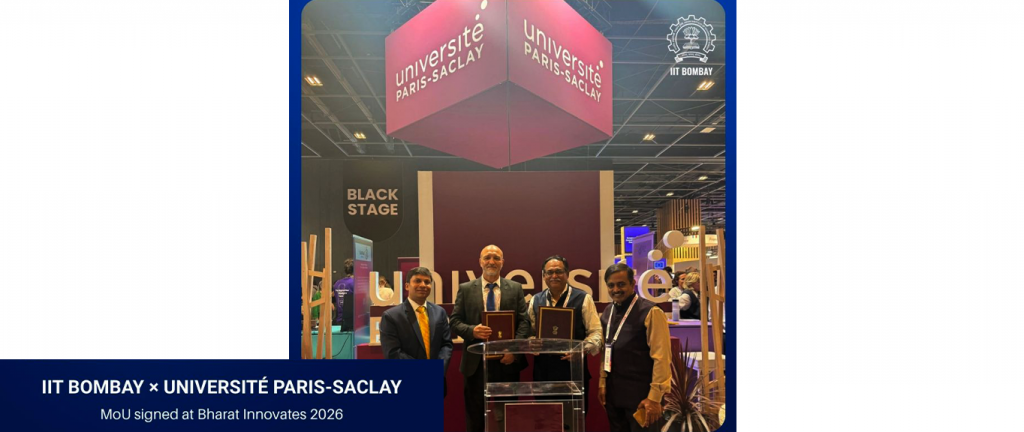
The Institute signed two MoUs with Université Paris-Saclay. The first agreement establishes an ICCR Chair Fellowship on Artificial Intelligence for Cultural and Social Research, while the second one deepens an existing partnership between the two institutions by focusing on technology translation, incubation, and startup acceleration.
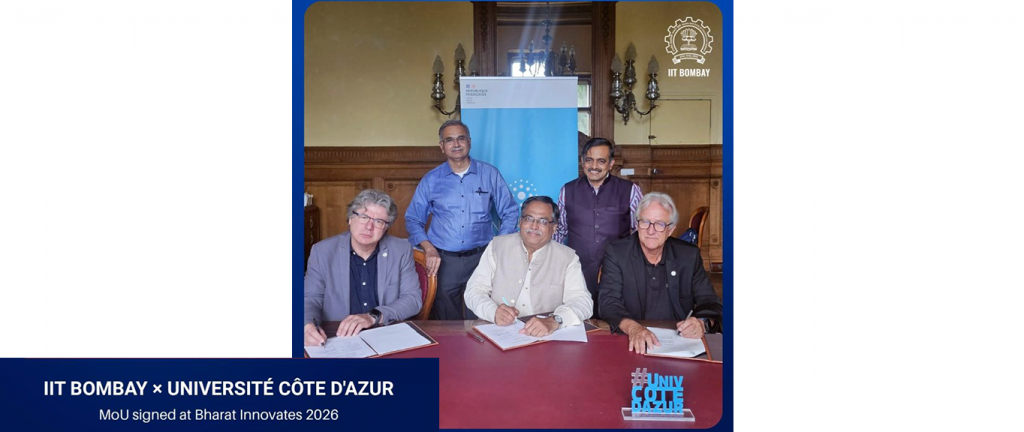
The Institute signed an MoU with the Université Côte d’Azur, the host region’s own university. The partnership will bring research, entrepreneurship, and innovation closer together across India and France, creating opportunities for ideas, talent, and technologies to navigate more freely between the two countries.
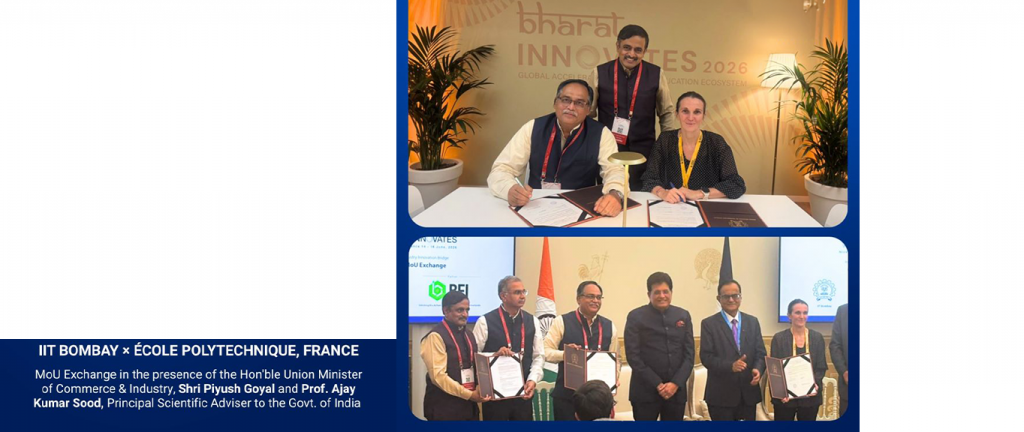
The Institute also signed an MoU with École Polytechnique, France, at Bharat Innovates 2026 in Nice, in the presence of the Hon’ble Union Minister of Commerce & Industry, Shri Piyush Goyal, and the Principal Scientific Adviser to the Government of India, Prof. Ajay Kumar Sood. The partnership aims to strengthen collaboration in research, entrepreneurship, and innovation, enabling a greater flow of ideas, talent, and deep-tech technologies between India and France. It also forms a key pillar of the proposed India–France Incubator Bridge, designed to connect incubators, startups, researchers, and industry ecosystems across both countries.
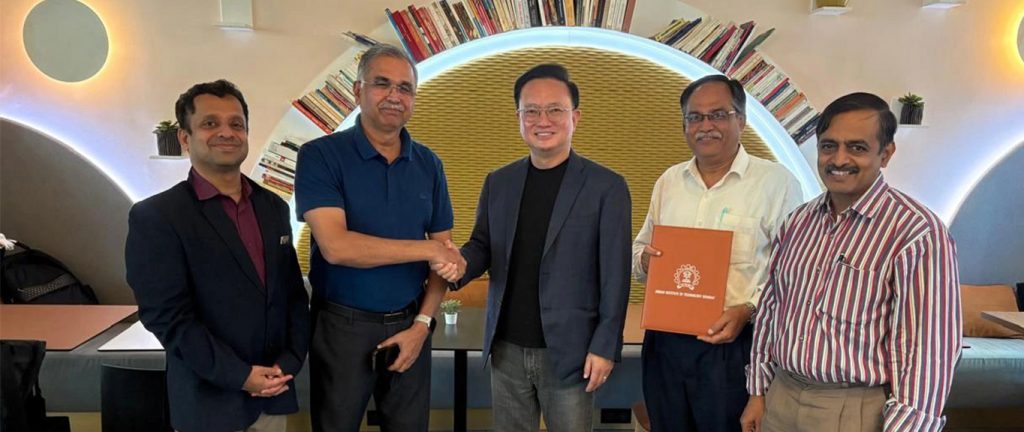
IIT Bombay and BharatGen will support and participate in Project Tapestry: an open, global consortium for nations to advance frontier AI together. A Letter of Intent was signed by IIT Bombay in the presence of Prof. Ganesh Ramakrishnan, Founding Director at BharatGen. Project Tapestry was represented by Dr. Christopher Nguyễn, Chief Architect of Project Tapestry and AI Alliance Board Member.
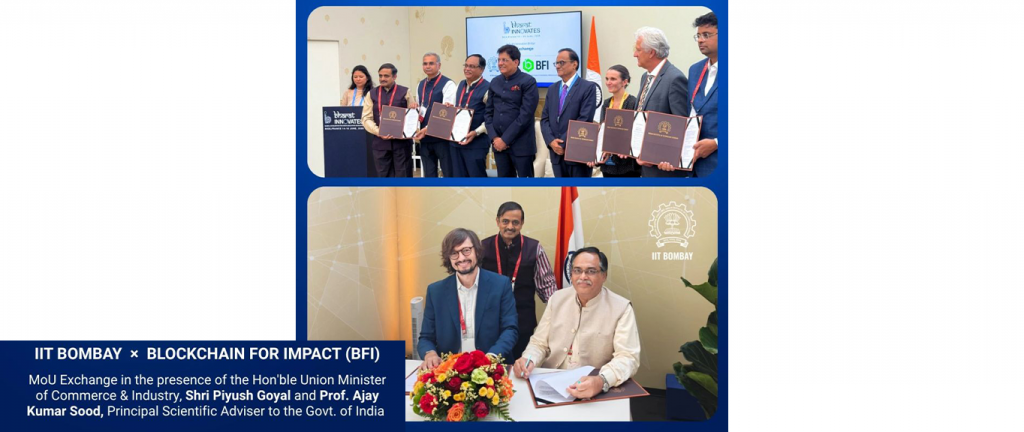
IIT Bombay announced a new collaboration with Blockchain for Impact (BFI). The MoU was exchanged in the presence of the Honorable Union Minister of Commerce & Industry, Shri Piyush Goyal, and Prof. Ajay Kumar Sood, Principal Scientific Adviser to the Government of India. IIT Bombay and BFI will support biomedical startups from the first idea all the way to market access, all while working alongside a European ecosystem of universities, hospitals, and investors.
LAUNCH OF THE GLOBAL INNOVATION AND INCUBATOR BRIDGE
Bharat Innovates 2026 also saw the launch of the Global Innovation and Incubator Bridge in the august presence of the Honourable Prime Minister of India, Shri Narendra Modi, and the President of France, Mr. Emmanuel Macron. The Institute is the Co-Chair of the bridge which is a structured pathway for startups, institutions, industry and global partners to collaborate across the innovation lifecycle- from incubation and validation to market access, commercialisation, and global scale-up.
BEYOND RESEARCH: BUILDING AN INNOVATION ECOSYSTEM
The story of IIT Bombay at Bharat Innovates was not limited to technologies alone. Equally significant was the Institute’s role in shaping conversations around the future of deep-tech innovation.
In a session on leveraging the global PAN-IIT network for deep-tech growth, moderated by Deputy Director Prof. Milind Atrey, participants explored how the IIT alumni ecosystem can provide the patient capital, mentorship, market access, and long-term support that deep-tech ventures require. The discussion highlighted Bharat Innovates’ growing potential as a platform connecting researchers, entrepreneurs, investors, industry leaders, and global markets.
The Institute also played a leading role in discussions on strengthening France–India innovation partnerships. In a strategic dialogue titled The French Riviera & Indian IITs: Building a Bilateral Innovation Corridor, focused on building a bilateral innovation corridor between the French Riviera and the IIT ecosystem, participants identified opportunities across AI, clean energy, healthcare, cybersecurity, semiconductors, quantum technologies, and agritech. The conversation reinforced the idea that future innovation partnerships must move beyond academic exchange toward joint R&D, startup collaboration, and market access.
FROM MUMBAI TO THE WORLD
Together, the technologies, startups, and strategic conversations presented in Nice conveyed a clear message: IIT Bombay is increasingly operating at the intersection of scientific excellence, technological innovation, and societal impact.
From multilingual AI and clean energy breakthroughs to educational technologies and advanced industrial systems, the Institute demonstrated how research-led innovation can contribute to national priorities while competing on the global stage.
Bharat Innovates 2026 offered a glimpse of that future. IIT Bombay helped define it.
Image sources and more on the story, click here: BI1 / BI2 / BI3 / BI4 / BI5 / BI6 / BI7 / BI8 / BI9 / BI10 / BI11 / BI12 / BI13 / BI14 / BI15