
IIT BOMBAY DEPARTMENT HIGHLIGHTS
As part of an ongoing series, IIT Bombay is spotlighting its academic departments to showcase the depth and diversity of work taking place across the Institute. From research and innovation to faculty and student achievements, this initiative aims to build greater awareness and engagement within the alumni community. Through these features, we invite alumni to reconnect with their departments and explore meaningful ways to contribute to their continued growth.
This month, we feature IIT Bombay’s Department of Metallurgical Engineering and Materials Science (MEMS).
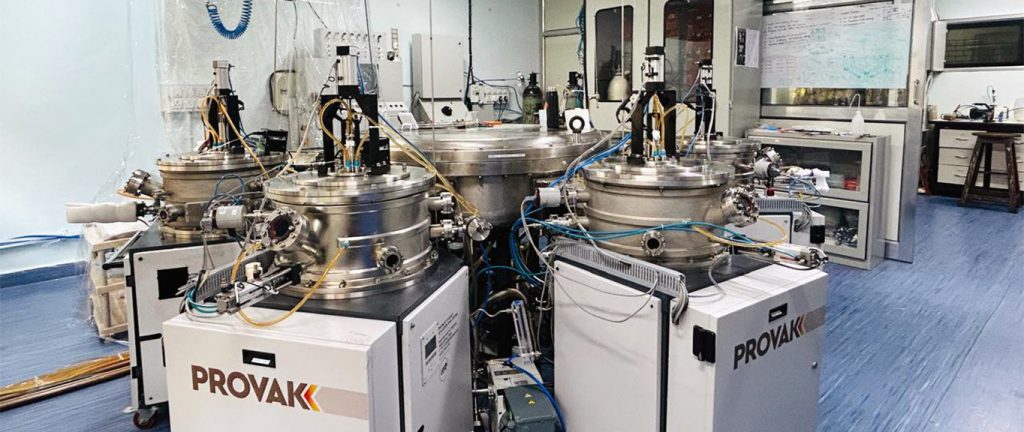
Department of Metallurgical Engineering and Materials Science (MEMS)
The Department of Metallurgical Engineering and Materials Science (MEMS) has faculty who represent almost all major domains of current interest, research, and industrial interest. Most of the research carried out in the department can be categorised into the following
- Physical & Mechanical Metallurgy: Focuses on the relationship between microstructures and mechanical properties. Areas include fracture mechanics of thin films, high-temperature deformation of superalloys, and the development of nanostructured steels, materials for hydrogen storage and their mechanical behaviour.
- Process Metallurgy & Manufacturing: Involves the study of metal extraction and refining. Key interests include green steelmaking, recycling of “urban ores” (like spent batteries and e-waste), and high-temperature kinetics in ferrous systems, refractories, slag-metal interactions, etc.
- Corrosion & Coatings: Dedicated to understanding and preventing material degradation. Research includes metal-ceramic interfacial stress corrosion, hydrogen permeation, and protective organic coatings.
- Electronic, Magnetic, and 2D Materials: Explores materials for future technologies, such as 2D transition metal dichalcogenides (TMDs), superconducting spintronics, Josephson junctions, piezoelectric, and ferroelectric materials.
- Energy Materials: Research on materials for energy storage and conversion, including non-linear frequency response analysis of Lithium-ion batteries and thermoelectric materials, silicon and perovskite solar cells, and hydrogen generation.
- Modelling & Simulation: Development of computational tools such as crystal plasticity models and finite element tools to predict deformation behaviour and phase stability, phase field modelling, DFT techniques etc.
- Structural Ceramics: Focuses on the development and characterisation of advanced ceramic materials for structural applications.
- Polymers & Soft Matter: Investigates polymer blends, composites, and macromolecular transport through nanometre-sized pores.
Specialised Facilities and Centres:
The department hosts several advanced facilities to support these research areas:
- Centre of Excellence in Steel Technology (CoEST): Focuses specifically on industry-relevant R&D for the steel sector
- Water Innovation Centre: Technology, Research & Education
- Characterisation Labs: Includes specialised units for Transmission Electron Microscopy (TEM), Nanoindentation, Scanning Probe Microscopy, and X-ray diffraction, Raman spectroscopy, AFM, Thermal Diffusivity/Thermal Conductivity Measurement, Texture and OIM (SEM-EBSD / X-ray-Bulk Texture / X-ray-Residual Stress), FIB-SEM, High Temperature Confocal Laser Scanning Microscope, etc.
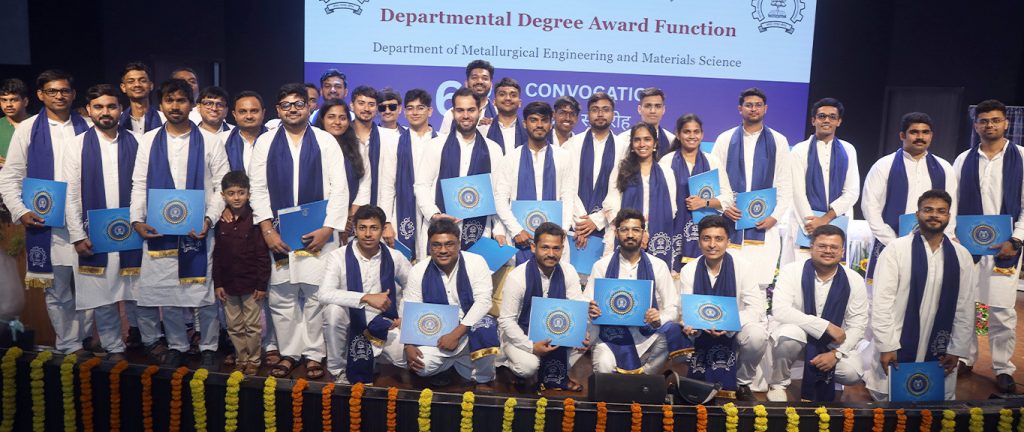
Some of the Start-Ups by MEMS Faculty and Students Include:
- Prof. Amartya Mukhopadhyay – Vaultionix Energy
- Prof. Parag Bhargava – AnyD Materials Private Limited
- Prof. Dipti Gupta – Dimira Technologies Pvt. Ltd.
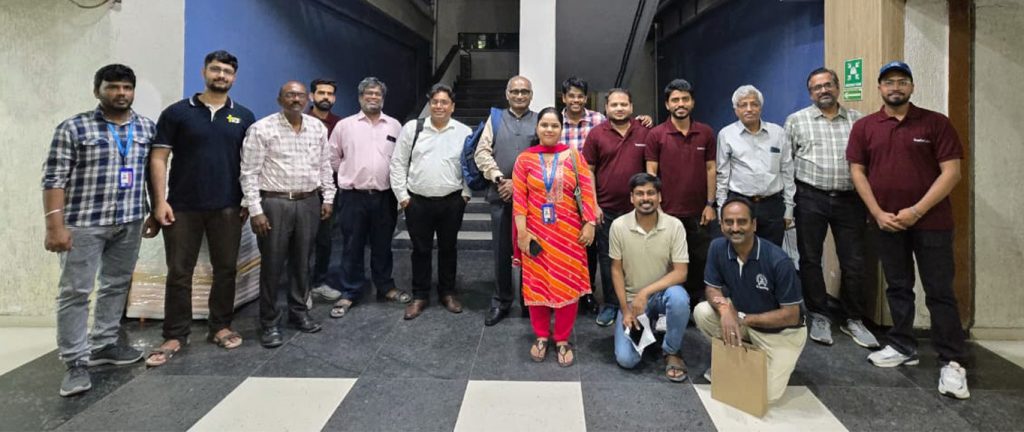
Recent Awards and Accolades
- Prof. S.C. Sahasrabudhe Lifetime Achievement Award (2025-26)– Prof. Rajiv O DusaneIIT Bombay conferred the Prof. S.C. Sahasrabudhe Lifetime Achievement Award (2025-26) on Prof. Rajiv Dusane, Department of Metallurgical Engineering and Materials Science, in recognition of his outstanding contributions as teacher, researcher, and administrator, during the Foundation Day celebration on 10 March 2026 at 3:00 PM in the P.C. Saxena Auditorium. It carries a cash prize of ₹2.5 lakhs, supported by alumni contributions.
-Link: IITB HP FD Lifetime Achievement Award - IIM-Young Metallurgist Award (Metal Science) 2025 – Prof. Nagamani Jaya Balila, Associate Professor, Dept. of Metallurgical Engg. & Materials Science, IIT Bombay
-Link: IITB LinkedIn IIM Young Award - Prof. Amartya Mukhopadhyay has been selected to receive the ‘ECSI- AMARA RAJA National Award for Advanced Electrochemical Technology’ 2025.
-Link: IITB MEMS AMARA RAJA Award
Recent Facilities Being Planned as Part of the Fund for Improvement of Science and Technology (FIST) Programme:
- Ultrasonic Atomiser: Ultrasonic atomiser is used to produce metal powder for the additive manufacturing using the Laser Powder Bed Fusion technique. The equipment will be used to produce metal powder with different chemical compositions on a few-kilogram scale. The powder will be used to produce test coupons using the Laser Powder Bed Fusion (L-PBF) process. Our target alloys are steel, superalloys, and titanium-based alloys, typically used for strategic applications.
- Variable Angle Spectroscopic Ellipsometer: An optical method that measures change in the polarisation as incident light reflects/transmits from the sample, to determine material characteristics (such as thickness, optical constants, void fraction, etc). Besides routine measurements under ambient conditions, we will have the capability to mount this on our ellipsometer system on a vacuum chamber (for a fixed angle measurement) for in-situ study of the surface reaction processes relevant in corrosion, surface modifications, film growth/etching and related studies.
- Metal 3D Printer (L-PBF): The laser powder bed fusion is an additive manufacturing process that allows for complex parts to be printed, layer by layer, using a laser that is rastered across the metal powder bed. The system will be used for alloy design, by coupling it with the ultrasonic atomiser, for both novel alloy science and strategic applications. Steels, superalloys and Al alloys are amenable to be printed, and provide scope for MRL (material readiness level) of 5-6 in the automotive, defence and aerospace sectors.
Two recent articles in one of the world’s highest impact journals, Nature Communications, by other faculty members:
https://www.nature.com/articles/s41467-025-63555-3
https://www.nature.com/articles/s41467-025-64594-6
Engage with the MEMS Department
As a proud alumnus of MEMS, you have the power to shape the next generation of materials scientists and engineers. Whether through knowledge, mentorship, or resources, your involvement makes a lasting difference. Here’s how you can contribute:
- Deliver a Lecture – Share your expertise with current students and faculty through a guest lecture on topics spanning core MEMS areas or career insights.
- Support ‘Padarth’ – The Annual MEMS Summit – Padarth is the flagship annual summit organised by MEMS students. You can contribute as a speaker or sponsor and help students gain real-world exposure and build meaningful connections.
- Contribute to Department Initiatives – Support faculty research, student scholarships, new lab facilities, or alumni endowments that ensure the department continues to excel and innovate.
Together, we can build a stronger, more connected MEMS community.
For more information or to get involved, please write to us at deptlegacy@iitbacr.com